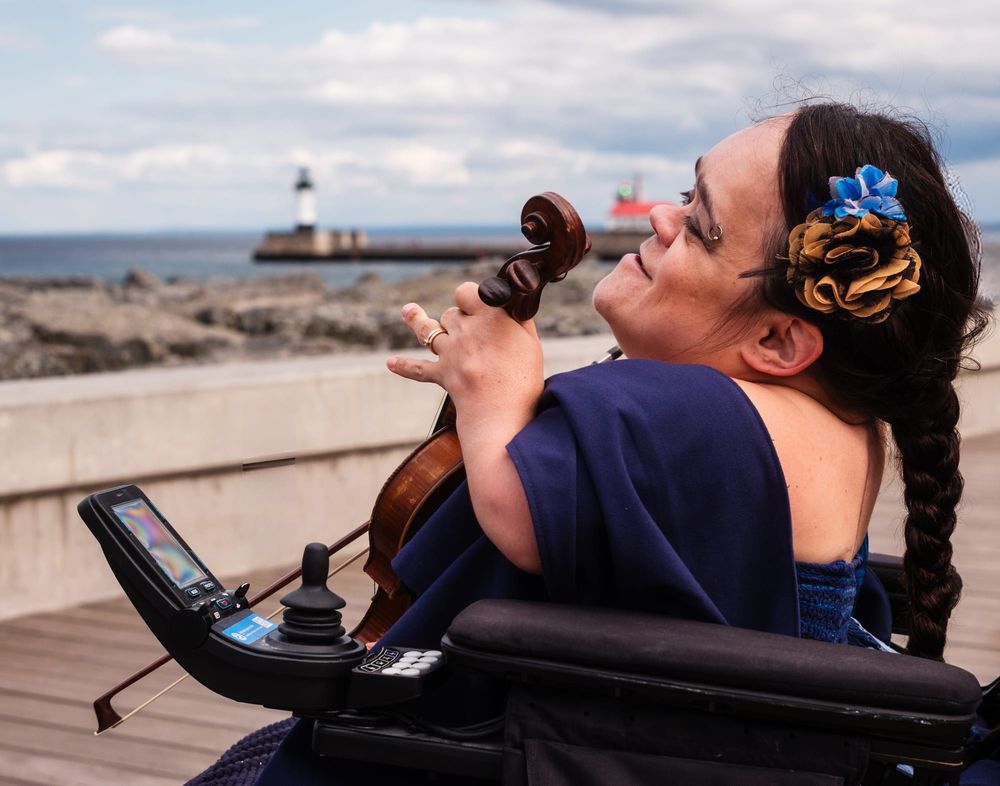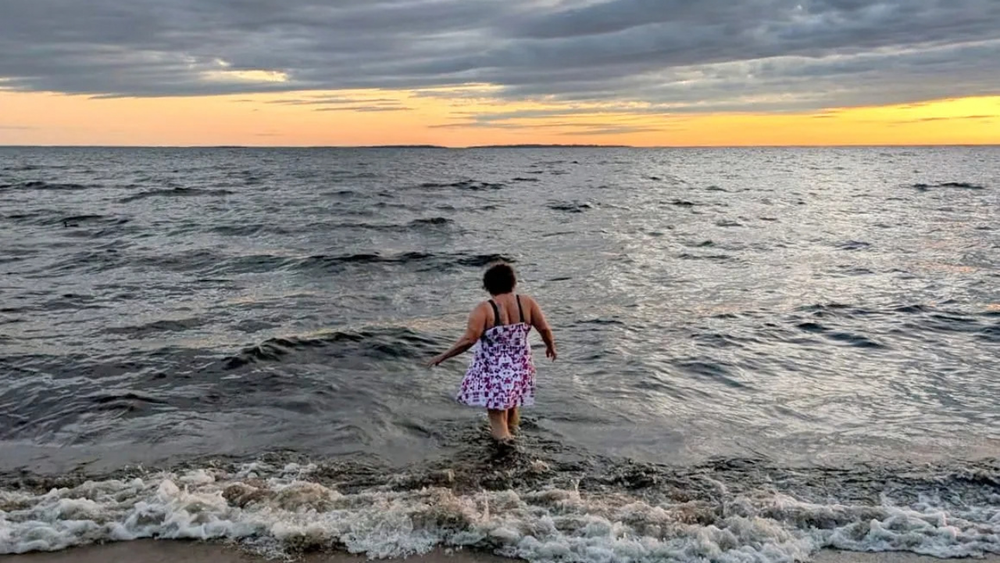

Risa reflects on gardens, seedlings, memory, illness, friendship, and the fragile courage of beginning again. Braiding together stories of Montréal community gardens, queer friendship, cancer, parenting, lost commons, and childhood, through music, memoir, and magic, this is a love letter to all our small bright attempts—to the vulnerable green selves in each of us that keep reaching for light anyway. A song for the wild-hearted, the weary, the grieving, and the still-growing.
The music in this episode is by contemporary composer Emily Doolittle who, you will be delighted to discover, composes music in response to and in collaboration with animal songs and also plants.
Three Summer Wassails
1. Blackberry Wassail
2. Potato Wassail
3. Mushroom Wassail
Three songs for SATB choir, composed by Emily Doolittle with poetry by Forrest Pierce. Commissioned with funding from the Canada Council for the Arts.
Performed by Via Nova, conducted by Daniel Galbreath.
I met Emily in Montreal when I was in grad school, my memory is holy but I think our mutual friend Robyn invited her to come to Diane’s house where people met to stitch and sing, and Emily taught us Georgian harmonies. Then I would go to her house, she would dumpster dive at the Jean Talon Market and make a big soup or curry and people would come and sing old folks songs, protest songs, one girl played a banjo-lele, another a zither, I let myself write some of my first songs.
Robyn was always there, a strength, a wind behind her and in her hair from the bike ride, a kindness and easy laugh and surprising twists of insight from cultural theory and island metaphysics.
Robyn died last year from a cancer that seemed beatable, manageable then wasn’t. My memory is frayed and blanked by chemo and all the tight anxiety of the last years but I remember singing in Emily Doolittle’s kitchen and Robyn’s clear voice and the bounty of gardens, rescued and piled high on the table.
These songs Emily shared were in part inspired by the orchard wassailing tradition, a pagan practice of singing and dancing in the garden and amongst the fruit trees at the end of winter, to call good spirits back and rattle away negative forces and to together call in spring and hope and good harvest.
When we were writing to each other about this episode Emily also sent me a piece she’d composed called Gardenscape to consider, and an essay she’d written about how that composition came to be. She wrote of the early days of Covid lockdown, two parents with two young kids bouncing off the walls all wound tight with fear and then finally some sort of rhythm established, and she sits to make music again and:
...after several of weeks of anxious nothingness, some inspiration crept in, albeit in a form I did not recognize at first. That form was a common wood pigeon, Columba palumbus, which took up residence in the cherry blossom tree outside my window. Those of you who have spent time in Europe in the spring will need no description of its call, but for those who haven’t heard it, some words that come to mind are ‘repetitive,’ ‘persistent,’ and ‘intrusive’.
(..)
I started a piece called, in reference to a baroque dance form based on repetition, Chaconne for Bassoon and Piano: or, Is This Wood Pigeon Ever Going to Go Away (The piece sits half-finished on my piano, perhaps awaiting some future lockdown to be finished?) And suddenly, as soon as I thought of turning my annoyance into music, I was back. I could think again, could feel, could engage with my surroundings: perhaps I could even appreciate and create art again. Because in wrenching my attention away from my unsettled brain and the newsfeed, this wood pigeon reminded me to attend to the world around me. Pandemic or no, the shared garden outside my window is home to a kaleidoscopically varied wealth of life: not just the insistent wood pigeon, but also the joyfully melodic blackbird, the cheerily aggressive wren, the marauding flocks of lesser black-backed gulls, and the rotating cast of cats, foxes and hedgehogs that variously lay claim to the garden at night. I may be complaining about the persistence of the wood pigeon’s call, but it was this very persistence that began to bring me out of my own head and back to the world.
Later Emily continues:
As I listened, made recordings, and transcribed the garden birdsongs—now a chiffchaff, now a goldfinch, now a wren—I began to relax into our bizarre time. I relearned how to appreciate what was still around me, rather than just mourn what wasn’t. I remembered previous times when increased attentiveness to the natural world helped form who I am as a composer and as a person.
And so this episode is a song of attentiveness.
A love letter from a fragmented self to my seed selves, previous selves and their sweet symbionts, singing friends of the garden.
A basket of fruit and fabric scraps and seed packets.
A song to wake our garden bed and orchards and call in the good spirits and beloved ancestors and our wild beautiful friends on their ghost bikes.
So we may love what is here, what grows, what cackles and sings at the window and taps at the door, what sprouts like infinite green stitches belying the lie of endless nightmares of endless end times.
This is a song of seedling kin.
Once, some years after grad school, I spent an evening in my friend Angela’s tiny Montreal apartment. She had put herself on the waiting list for a community garden plot in Little Italy years earlier when she’d lived down in the bottom part of the Plateau. Finally her name came up, and funnily enough, she had only just moved around the corner from the lot on Beaubien—and so had I. A little seed of hope for the future dropped half a decade ago finally sprouting.
Let’s put our names on dream lists, wait lists that seem impossible, witches, let’s throw fishing lines of great big and tiny dear little dreams into the great beyond, it’s spring, though I am still under deep snow, let’s believe in magic even in the face of it all.
Welcome to the Kinship Season of the Missing Witches Podcast, we have been missing you, all of you, the great big all of you that includes the seeds of all sorts listening in the cool dark, that includes the houseplants tilting in slow motion to follow the sun across the window of the day, that includes all our relations, all our more than human kin, we have been missing you, that’s a truth that is like a bud bursting endlessly at the heart of the Missing Witches project, at the heart of what we call our witchcraft, our feminist magic, our dancing with the re-enchantment—we miss you all and long for you and reach for you and make spaces to try and flicker with you, towards you, on road trips and in jam spaces, in gardens and at kitchen parties, in our online coven where we are waiting for you to come and co-create with us, and here, in the coven we make in the dark between our ears. Like synapses we leap towards connection and marvel at the generative world-making life-changing magical force in that crafting.
I am seedling kin.
I wanted in on the community garden thing with Angela, I wanted my hands in the dark, dirt under my nails, even if it was just weeding and watering. I wanted to help walk through the garden center picking little plants and seeds, turn the soil, learn which plants grew well near others. I wanted to make it past the padlock on the chain-link fence I walked by all the time on the way between the market and the metro, wanted to walk through the community garden like I belonged there—what bureaucratic magic do we need to accomplish to belong there, whatever it was I wanted in, in the end as is often my way, I made it in when someone else figured out the steps and held open the door. Then I could rest there, with the round-laughed man who I knew from the brew pub who only grew hot peppers, friends of friends with greying hair, wide skirts, wild permaculture plots bursting with food in 3 dimensions, and the elderly Venezuelan man with the plot next to us who raised a miracle of heritage seeds and offered us bags of vegetables, and the gentlest bits of advice for our barren hopeful little patch.
We feasted on kale that year, had a few tomatoes, and inherited a massive rhubarb. Maybe one small eggplant made it. We spent way more on the plot, soil, and plants than we earned back in food—but we were in a place where that was worth it. We were desperate for it.
Montreal’s been cultivating urban gardens since WWI, when 75 acres of vacant land were opened and 1,000 plots distributed to soldiers’ families, unemployed workers, and returning veterans. By the 1970s, residents transformed vacant lots into one of the largest municipal community garden networks in North America. Women, elders, immigrants, neighbours carried the invisible labour together: managing compost, seeds, waiting lists and potlucks. City blocks carved into little green plots where the roots are reaching out for memory. Waitlists are still years long and the padlocked gates still ask, community for who?
Angela and I sat in her tiny narrow dim apartment before that summer began and we dream-planted the garden while the snow clotted thick outside.
She made ointments, and I helped a little, stirring and choosing lemony oils, dreams of sunshine. While we stirred and planned, we made her kitchen table an altar for the lives and loves we wanted:
Cinnamon for passion.
Honey for sweetness.
Guitar picks for music.
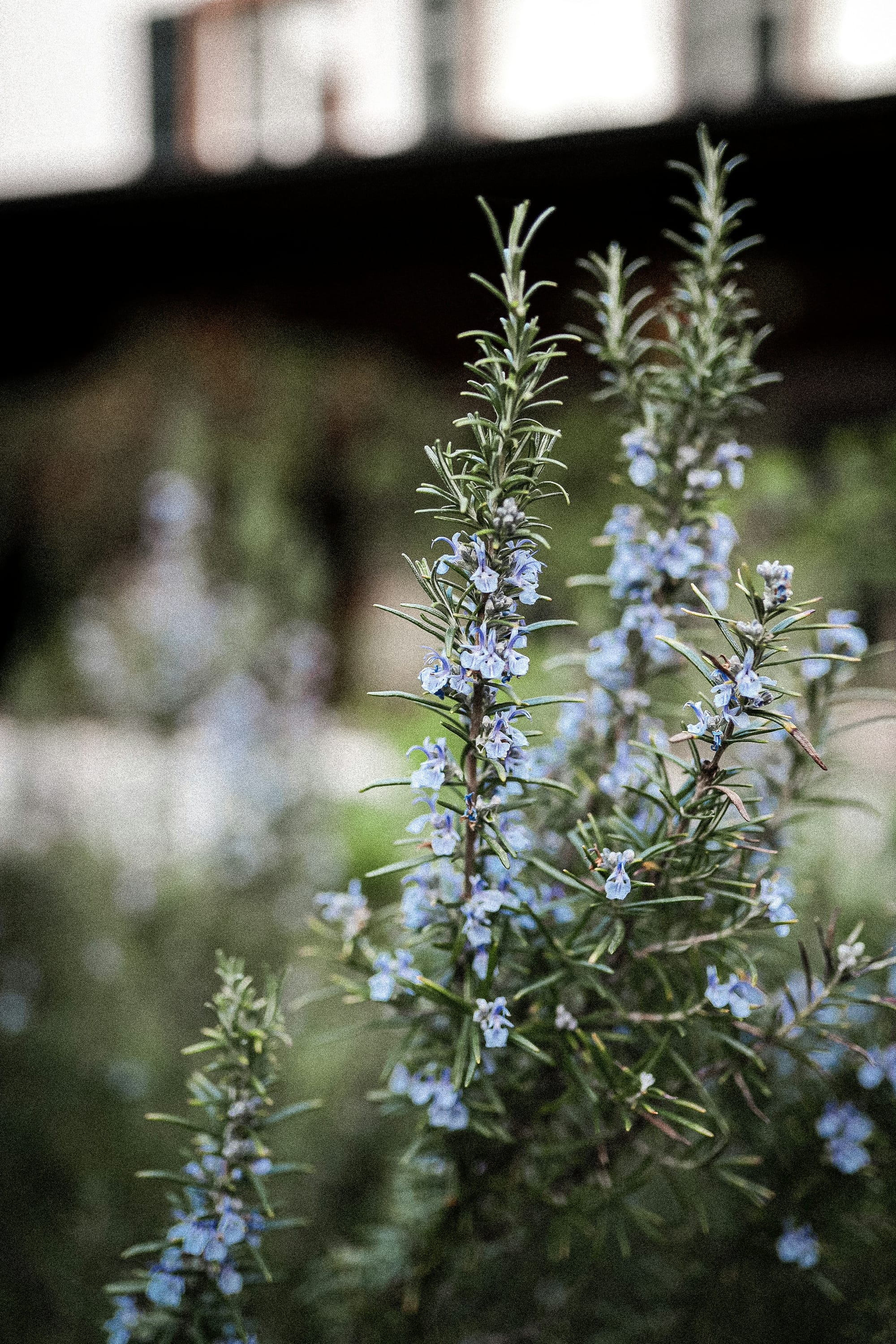
Rosemary for spirit connection, long talks, deep currents.
A kid’s toy.
A hammer for repair.
And all the plants in the house.
And all the seeds for the garden went on that improvised altar.
We wanted loves that were green and alive.
We let ourselves say it out loud, and show it to the universe in a little plot of living symbols, hopes scattered, each one a seed.
I'm seedling kin.
That was in my mid-thirties, I think, biking through Montréal nights from galleries to shows, drinking too much, dating men who were bad for me but the sex was good until it wasn’t. Always finding safety and return and myself again in circles of women friends, there were good men too and I longed for more of them, but I was always, as Audre Lorde puts it, a woman-oriented woman, I flourished in circles of wild girls.
I knew I was bi—pan, really, because the gender binary never summed it up, and I always related to Pan as an archetype, and the beings who are multiple who come from Arcadia with secret goddess worship, and Tumnus and the wild hunt and all the queer wood-folk.
But also inside me was this unavoidable knowledge about a future good man I could build a whole world with. And a kid. I don’t know how to explain it except that I knew she was coming.
So I put them on the altar of my reckless thirties and kept my sights set on them and tried to hurl my body toward them, wherever they were, and was content keeping my furry hooves and glances to the garden, the dance floor, pour the lives we didn’t live into all the potential of this now and watch what happens, we are seedling singers, seedling sisters, seedling kin.
We called this world in.
That summer, we sometimes went to the garden at night. Amy lived around the corner. We brought candles and wine and a joint, gathered little twists of herbs and new green leaves, and talked to the plants and the stars about our truest dreams.
We were protected there. The plants held us the way they do—breathing out oxygen and nourishment, hoping we’d remember them. Cynicism, bottom lines, and impossible endless growth charts stayed outside the chain-link fence. When you walked through the gate you could feel the change. I didn’t know the archetype energy spirit of doorways and forking paths and meeting places called Hekate then, not really, but that didn’t matter to the feeling of it.
You know the feeling of those places, don’t you, in your body? When everything is suddenly flickered into life, glowing and alive.
We’re seedling kin, we take an enclosure and use it to make a container that amplifies our desires, bright with this moment together, our minds light up with each new idea, roots and vines, bright in the night in the garden.
We sang and laughed under the moonlight—small groups of women, queer people, so tender with each other, so nourishing to our tiniest flickers of strength, of magic.
Two old women sat on the porch of the seniors’ home overlooking the garden and kept an eye out for us. Old trees giggling. Keeping watch.
In the wild, most seeds never reach maturity: only a small fraction germinate, survive frost, drought, predators, and disease. For every one seedling that grows to adulthood, thousands fail. The failure is part of the rhythm, because survival is collective, iterative, experimental. Even tiny green shoots that die return nutrients to the soil.
In the garden we try to make a space to improve our odds.
The etymology of the word garden comes from a Proto-Germanic root gardô meaning “enclosure” or “fence.” It shares roots with “yard,” “guard,” and “girth,” referring historically to enclosed spaces, though girth makes me think it wraps around our bellies too like clothing, what keeps us in and performs our civilization and also keeps us warm and fed. Concordia Professor Mitchell McLarnon creates toolkits with a team of students to connect educators and community organizers with resources that support climate education through gardens, he asks what is this garden for, and who is allowed in and who is kept out and why are they enclosed?
Before modern community gardens, rural Europe relied on commons: shared meadows, forests, and fields where villagers grazed animals, gathered fuel, and cultivated food. Beginning in the early modern period, these systems were dismantled by Inclosure Acts, privatizing land and forcing rural households toward wage labour in cities.
The loss of shared land reshaped knowledge: herbal medicine, seed saving, midwifery, and small-scale cultivation—practices most often carried by women, the ways we made our lives, saved lives, nurtured life—were marginalized, broken into fragments of ecosystems, persecuted or displaced as professional authority expanded, they called them witches and they hunted them making it only more obvious how kin we are to every wild thing turned prey. A lot was forgotten but some hid in the woods or hid in plain sight and kept seeds. Some kept seeds in their DNA, in their genes, beneath conscious memory but ready to sprout in the moonlight when conditions were right, dropped even if just for a moment onto crossroads of connection, of right relation.
Nineteenth-century allotment gardens gave workers small plots, but these were supplements to wages, not restorations of the commons, not reparations.
Our Annual Reparations Fundraiser Starts May 1st!
When inside a community garden, I feel the commons beneath it and around it, I feel Arcadia. And that feeling informs all my work, all the spaces I try to make, the way we nurture our Missing Witches coven, building nourishment and community in small tender gardens—enchanting for a version of the world where flourishing spills beyond containers, fills all our cups, weaves us back into the thick heaving living tapestry.
This is my witchcraft as life practice.
I am seedling kin.
One million bright attempts, feeding myself with my failures, making openings in the chain link, putting roots down deep as we can to reach the common ground.
This winter, almost fifteen years later, I stayed with Angela while I was in Montréal for appointments. We’d been out of touch, sometimes people are in your life for a season and that’s okay and the lines diverge, and after I was diagnosed with cancer I was surprised by who I heard from and who I didn’t, but not surprised that some people couldn’t come up with the words.
But then after a time, once I was through surgery and chemo and was living in MTL for 6 weeks doing my daily radiation, Angela did reach out and came to visit me and she brought me a little purple plant that’s been flowering ever since, and she cried apologizing for not being there the whole time and it didn’t matter, I was so happy to be back in the gravitational field of my friend.
So anyway, a few months later I came to stay for a few days and Angela drove me around making the slog in the snow between appointments friendly by keeping me company. Her father had just been diagnosed too, and so I felt I had something to offer her in return for the kindness, if only a little understanding. The immediate shock and the long slog ahead.
My meetings were long and boring and scary and frustrating and pinballed between opposite ends of town.
I had a meeting with a disinterested osteoporosis specialist eyeing his $200 takeout sushi lunch while chatting about how I’m already osteopenic and my bone density could plummet further now that all my hormones have been turned off (to keep my hormone-positive cancer from returning). But he’d like to wait a year before starting preventative medication to get a baseline… even though the loss usually happens in the first year… and the treatment to restore bone density isn’t covered unless my cancer goes metastatic... Even though there’s a drug I could start right away that would prevent that crash…. which has no side effects at my dose… Anyway now I’m on the drug, I seem to have prescribed it to myself.
I also had a follow-up with my lung specialist about lesions on my lungs, still a mystery but not cancerous, based on a lung biopsy that felt like a hallucination: semi-conscious, tools down my throat punching through the walls of my lungs to take samples.
I also had a pre-op meeting to plan my oophorectomy, so I could stop getting the large needle at the nurse’s office every 28 days that keeps my estrogen asleep.
The oophorectomy went well, but it triggered my sixth infection and another stint in the ER.
And now I get two large needles, one in each hip every month for 6 months in hopes of keeping the infection from returning.
And I’m sorry, how boring, I don’t want to write a dirge of hospital returns.
I want to inscribe just enough on the record so you can see the outlines of the unseen parts, the secret indignities, the boring laps back into crisis. All the time in sterile spaces, heaps of plastic used to heal and then discarded. All my failed seedlings and the thick soil of dead roots we all move in all the time and how awful and beautiful it is, because Angela, this sweet friend from my wild thirties, shows up just in time, a long trajectory arcing back, drove me around, kept me company, and let me rest in the little home she owns now: a tiny pocket I never knew existed in Montréal, wartime houses preserved on arching streets that wrap around what used to be a massive community garden.
The neighbourhood was built for factory workers making war machines for fighting Nazis. They worked long hours then went home and tended to their liberty gardens, trying to keep food on the table. When the war ended, the city thought they’d all move downtown, but they didn’t. They insisted on their homes. They insisted on a school. So the government let them keep their homes, and to make a school they paved over the garden.
Breathe here for a minute. What if we had homes, and schools, and gardens? Is it so unreasonable to imagine a life where living—its needs and joys and delights—is centered, layered, YES AND to all of it for all of us? Evenings laughing in the garden. Learning, kids and old folks, the sick and the mad and the well, all our access needs, all together. Casting spells of new life, sprouting, all us little seeds. Is it such a wild dream? Lets build this with all our kin instead of war machines. So be it, see to it, blessed fucking bees.
The love spell Angela and I improvised with garden seeds in that tiny dark apartment, a decade and a half ago, worked, by the way.
Angela’s home is full of light, happy plants now and out front she tends raised beds twice the size of our old allotment. Her partner is kind. They read quietly and cook together. The basement is full of instruments; the fridge is covered in ticket stubs.
In my house, the plants fill every window sill. It looks like a jungle: an unlikely forest of ancestors lovingly tended by Marc and our kiddo. They managed to keep them alive and thriving while also tracking how much fluid was coming from my drains, keeping spreadsheets of medications, driving me to blood tests and chemo twice a week. Even after that time had passed, when their own anxiety and death-terror were allowed to unfreeze and take up space, they still watered and fed the plants, calling each by name. Slowly we found tiny floating islands of calm. Not normalcy, but an archipelago of new stable states. I found the future I had always been throwing my body toward.
This spring we are dreaming of starting seedlings again, planning our first attempt at a small deconstructed community garden practice around the lake. One neighbour turned a tempo into a greenhouse; another is donating their sunny flat corner lot lawn, the only unforested spot on the lake; we have tomatoes and sprouted potatoes in pots in the living rooms, in our plans we are lining plant pots up at the dead end of the road soon as the snow melts. It isn’t perfect, and I’ve come to expect a great deal of failure and suffering in the compost of all this living and joy.
Angela has health stuff too. Her dad’s in chemo now. Mine had a heart attack this winter but they’re doing ok.
Living a magical life isn’t an escape—we’re all downstream these days from toxic, catastrophic extractive decision-making. And death is our constant companion no matter how much we pour on the altars of purity cultures.
But if we want to, we can be witches. We can imagine turning an enclosure, a constraint, into a container spell, declare a boundary within which we tend ourselves, our garden mates, wwe reverberate and amplify, and reach and plot and leap from there towards our densely interwoven futures. Nurture the power of our will to be curse breakers, new pattern makers, who worship life in every tiny inch of soil.
We can be seedling kin.
One summer when my little kiddo was 3 or 4, in the house in the woods I bought on a wild dream, before I had found the partner that could build that life with me, before I’d figured out how to stop working for other people, before I learned to drive, before she was more than a flicker in my eye I bought this house and now we’re here and one summer we sprouted everything we could find: every bean in the cupboard, every lentil, flax seed, chia, every dried pea, all the little packets of old seeds from the community garden days hiding in the backs of cupboards. The basement became a mini grow-op, heating lamps humming.
Lots of our little seedlings failed but still somehow the windows filled with sprouts. Some made it outside where the hares and snails and red squirrels welcomed them with delight. We grew tomato plants that would never fruit in the short, cold season. Butternut squash that stretched in long, hungry vines, starved because I didn’t yet know how much fertilizer they needed—and we can’t use artificial fertilizer here anyway, too close to the lake.
I saw my parenting, my attempts to build a life as an artist, in all these failed seedlings: tender hope, overambition, joy tangled with frustration. I want to remember all the lessons, but memory feels so frail now.
I have to have hope that things live beneath the surface of what I can hold onto, in the soil, written on our bones. I whisper to my kiddo, to my younger self, to the self beneath memory, to Robyn, to the seven-year-old inside: the attempt, the laughter, the failure, being here together was the lesson. We are and remain seedling kin. Each one reaches, vulnerable and brave, upward toward light, and down into the dark where all our little deaths feed us and keep us company.
To my kid. To my kid self. To the kin in you.
Tiny, green,
Rooting in wild selves. Learning, failing, Reaching into a world that feeds us with light, water, and the mathematics of soil— And has a million ways to kill us.
Here’s to a million more failures together,
Here’s to our wise reckless hoping.
Here’s to all our seedling kin, one million bright attempts cresting each spring like a wave, may they carry you forward and keep you company and hold you in the truth that we are tiny and bound for statistically massive failure, and also bursting with a power beyond all reckoning.
We are infinite and inevitable and ancient, throwing our bodies towards the gates, bringing a green time and a harvest beyond what shortsighted systems could ever imagine.
We’re seedling kin. And we are coming.
Blessed fucking be.