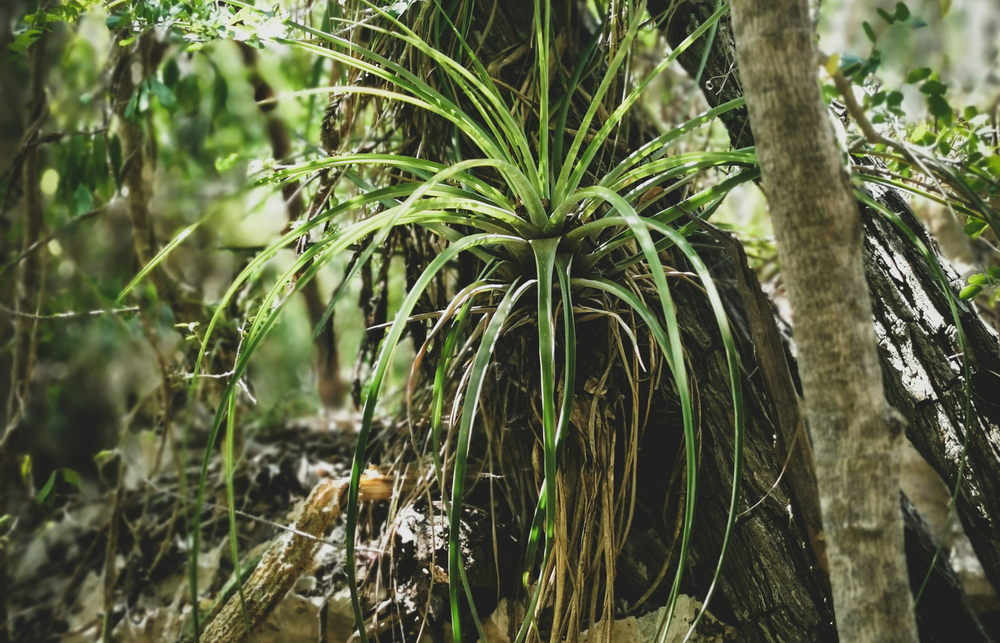
I Am Spider Plant Kin – Everywhere and Unkillable
Welcome to the spring season of the Missing Witches Podcast, our kinship season, which is dedicated to getting familiar with our familiars. This is where we take time to learn from our more than human kin. In the fall, we'll do a season dedicated to people's stories again, our classic Missing Witches stories, and throughout the year we'll have Witches Found interviews - our list of people to learn from about craft and magic and resistance and re-enchantment is long and fertile.
But in the Spring, we need to balance out against people logic by digging into soil, learning about the plants and animals and rocks and winds and waters that are us too, as we wind our wild ways through the holobiont that we all are, here on earth. These episodes were originally conceived of as tongue in cheek anticapitalist motivational meditations, and we hope you'll take these offerings in that original sense: seed bombs hurled on the pristine dying lawns of Mondays.
Note: This episode features the song Heights by Ruby Singh and is used with kind permission.
I was not successfully a houseplant person on my own.
In my 20s I lived with my friend Emilie in an apartment that looked out over Mount Royal with these old woodframed french doors and a wrought iron railing – not a balcony, just a 10-foot window with a balustrade four floors up in the air that made you want to lean out into the wind and sing. Sometimes our neighbour would lean out of his french doors next door and drunkenly play the trumpet. It was that kind of thing.
A wild and flourishing thing. For a while.
A fast road wound immediately below like a river and we could see a convent with its dwindling numbers of cloistered nuns silently keeping their secrets, pacing their 4th floor balcony on the next block, behind the consulate. Beyond that was all the fierce movement of wind in trees up the hill made into a parc by the urban planner who had also made Central Park, a lung maker in cities. Mount Royal.
Emilie kept a little tree alive in that apartment, but barely, and it died when she left for that room on Vancouver’s east side with the shared bathroom down the hall, for love, for music, for love. I had one spider plant which became like seven, in the way of spider plants. Maybe our twenties are spider plant years.
At first I was pleased with that plant, and with myself, an offshoot of one my mother kept alive. I was delighted with the way it shot out long stems and grew roots in the air like white fingers fingerwalking, looking for better soil, and proud of my little babies.
But after cutting and transplanting a few into more poor soil, I have to admit I came to hate them. They were everywhere failing: pale yellow leaves, white knobby little obscene root fingers on every end, creeping dry and ugly across the rain-damaged wood floors. They never quite died but they weren’t happy either.
But those little fingers were reservoirs. Even when the leaves failed, the plant was storing life for later.
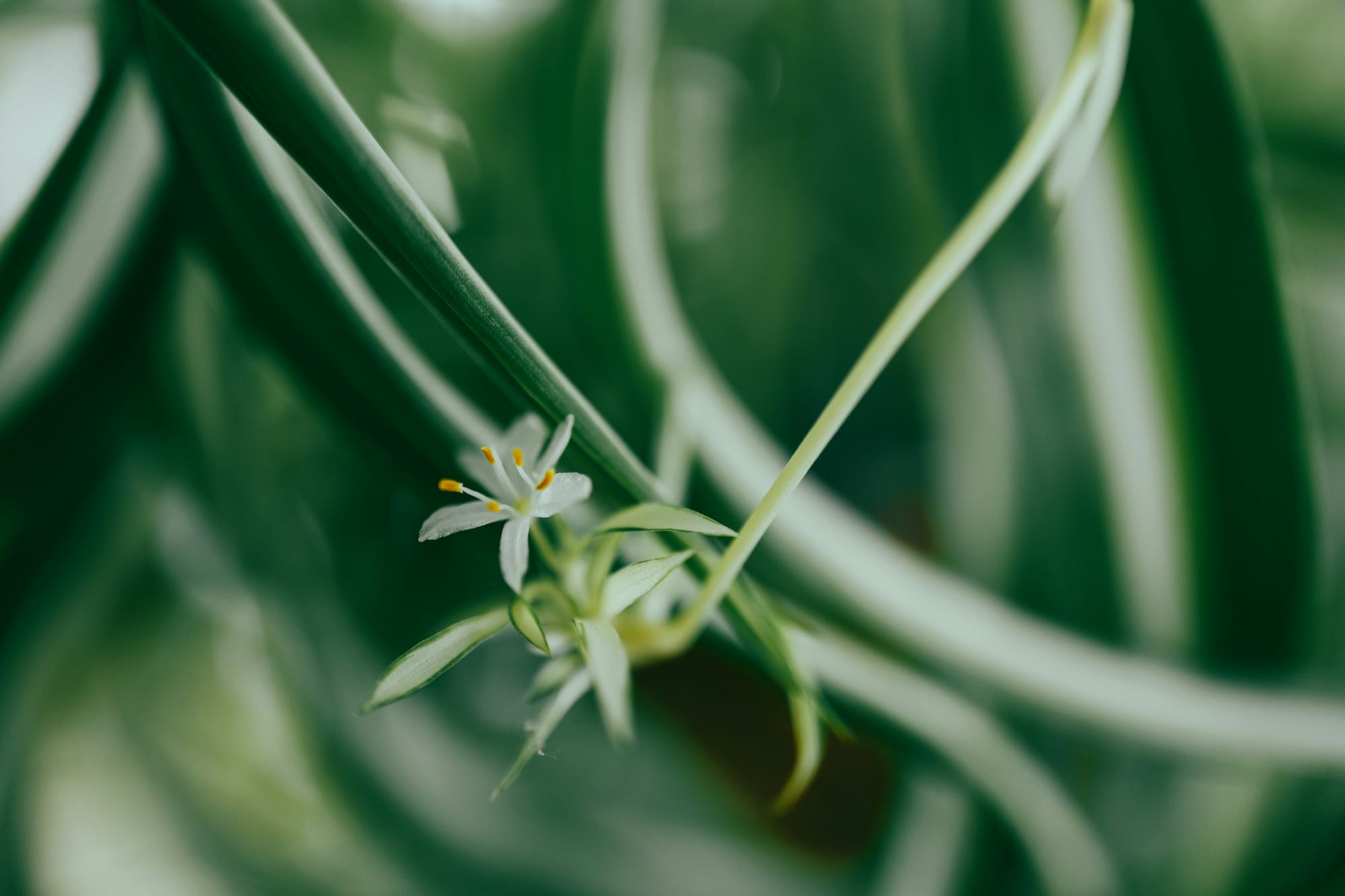
The houseplant we call the spider plant—Chlorophytum comosum—is native to tropical and southern Africa. It evolved in wet shady river valleys, forest edges where light flutters down through trees and water is stored in thick roots that help it make the relay through drought season. When we import it to our kitchens and living rooms, its biology still remembers: long arching leaves above, cascading through canopies, underground resonating thick and wet.
What we call a houseplant is a migrant. Although that’s not the most accurate metaphor from human experience for someone who is taken from Africa without their permission and forced to adapt to small containers, icy winters, food that makes you sick, body subjected to the concept of property and being property.
Did I remember to say that these kinship meditations are and have always been anti-imperialist seedbombs thrown onto parched lawns?
That we are here, in the coven we create between our dreams, to wonder in widening circles about how to resist the death cults that have evolved and expanded their logic reaching from early to late stage capitalist expansion, slavery, mono croppping, an international trade in living beings, systems that evolve and shape the kyriarchy keeping resources flowing up to high narrow peaks increasingly detached from the web and susceptible to collapse, and did I say that we will write from here a kind of threnody to all the beings and ideas and relations and witches we are missing to try and together re-enchant the world? That it will be imperfect and we will do it anyway, and we will try just not to fuck it up too much?
I was as miserable as my spider plants. But we were tough and knobby and difficult to kill.
I didn’t want to understand what they were saying about me and the situation we were in. I had a migraine for 10 years but I looked away from the information the spider plants were scratching in the air along the edges of that apartment. They were living what I was too.
A not-thriving. A longing to walk away on ghostly new appendages. A memory of a life that was more alive.
Because by then Emilie had moved out and my boyfriend had moved in and he smoked weed all day long and built a super computer with twelve Linux machines running time trials humming like an airport all night long. We had fun too, and we made wild art events together, but we couldn’t figure out how to main it sustainable. The plants got sicker and sicker and the pipes never worked well and then the bathtub coughed up black gunk and we got behind on our rent and hid from the handyman because we owed him money and because I was scared of him, the way he’d cornered me in the bathroom once and I felt the air full of threat and the stench of rot in the black bath and the way he’d bang on the doors in the night and we’d pretend not to be home, only ghosts here creaking.
We made it out. It wasn’t pretty but we did it.
We had that white, middle class, settler-colonizer privilege of second chances.
A friend who was moving signed over his lease to us, a cheaper, smaller apartment. No plants.
Eventually I left the relationship too. I had to leave everything and walk out the door one day into the snow and then start calling people to see where I could sleep that night.
I took a series of crummy jobs until I got one that offered me a balance of corporate safety and some space for my community-building magic and some time and resources to breathe a little bit.
I had to find in my body a version of myself that I could recognize.
In the following years I threw my body — sometimes recklessly — out of the Mile End in Montreal and into the world. I went to South Africa and sat on Table Mountain in the fog with my little sister as she slowly acclimated her body to the grief of leaving the pregnant mothers she had dedicated the last year of her life to in Uganda behind. I went to Vietnam and walked for hours to sit in dark caves where the Buddha had come to worship a presence in the earth that people had come to to pray for their children for thousands of years before he joined them. I went to Miami and Shanghai and Nashville, lots of other places, sometimes for work, always to meet hologram versions of me and to see what they knew.
It was a privilege and also a kind of compulsion. Sometimes I watched myself from the outside shaking my head. Sometimes I put myself in bad places, it was related to the drinking and the weed and the cigarettes, it was a purer form of whatever that harmonic was I was always chasing.
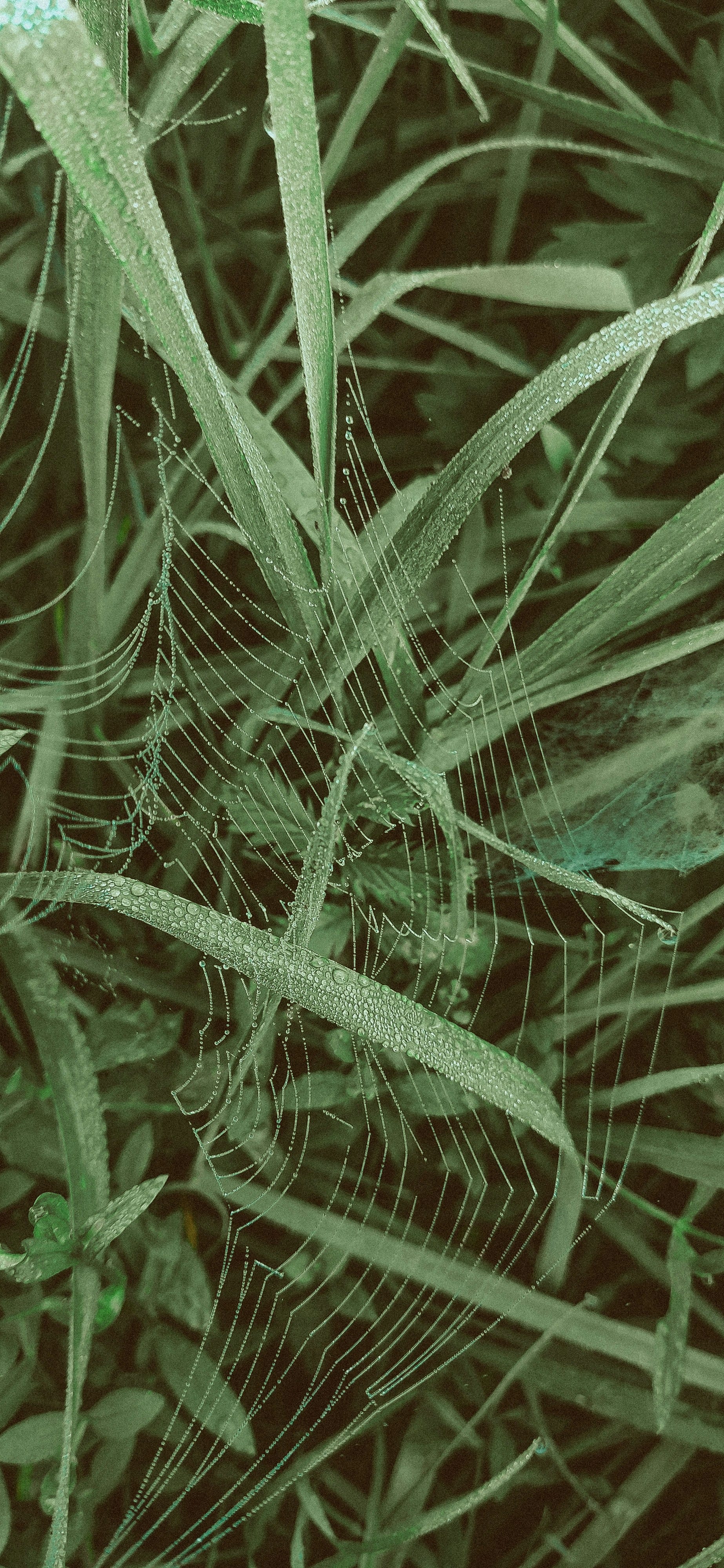
The spider plant’s most famous habit is reproduction by wandering.
Instead of relying mainly on seeds, spider plants grow long flowering stems that produce tiny plantlets—miniature clones—at their tips. These dangle in the air until gravity or an animal like a human being brings them into contact with soil, where they grow roots and begin again.
Botanists describe these stems as inflorescences carrying vegetative offsets. The strategy is one of dispersal without forgetting: each new plant is genetically the same individual extending itself outward, a living network of selves, an everywhere self, everywhere seeking.
Not children exactly. More like fingertips of the same body reaching for another surface.
When a spider plant sends out its long arching stems and forms little plantlets at the tips, those plantlets are produced through vegetative reproduction: no pollen, no mixing of genes, no second parent.
Each plantlet grows directly from the tissues of the parent plant and carries the same DNA. Botanically they are clones: genetically identical extensions of the same organism.
This means the hanging chains of spiderettes are not a family tree but a body spreading outward.
Many plants use similar strategies — strawberries send runners, aspens share underground roots — but the spider plant does it in mid-air, suspending its future selves like a mobile of green comets waiting to land.
Because houseplants are almost always propagated this way, millions of spider plants across the world belong to just a handful of ancient genetic individuals. The most common variegated forms — cultivars like Vittatum or Variegatum — have been reproduced almost entirely by cloning since the nineteenth century, when they were first circulated through European botanical gardens and horticultural trade.
Every time someone hands a friend a spider plant baby, the same organism stretches a little farther through the human world.
Its body exists as a scattered archipelago. Everywhere seeking.
I’m spider plant kin.
Spider plants remind me of another distributed body, Henrietta Lacks'.
In 1951 Henrietta, mother of 5 children was bleeding, she went to Johns Hopkins, one of the only hospitals that would treat a black woman with cancer. When treating her cervical cancer by stitching radium inside her cervix, the best treatment at the time, doctors took cells from a tumour in her cervix without her knowledge. They were taking cells from every patient, black and white, in keeping with protocols that were acceptable at the time, but that doesn’t make it right, does it? To take from us without asking us, especially us cancer patients from whom everything is being taken, time with our kids, dignity, comfort. She should have gotten to know before she died at 31, her children should have gotten to know, that Hernietta’s cancer cells —HeLa cells— didn’t die. They kept dividing.
Her cells taught cancer researchers the difference between carcinoma in situ and invasive cancers like mine. Oncologists used HeLa cells to test the toxicity of chemotherapy without having to test it on patients.
Hernietta Lacks saved my life and millions of others.
Her cells helped develop Polio and Covid-19 vaccines, cancer treatments, gene mapping, IVF, decades of biomedical research. They’ve grown in labs across the planet, frozen and thawed and shipped through the mail, been sent into orbit.
And the woman they came from was a Black tobacco farmer whose family remained poor for decades while the global biomedical industry benefited from her body. Johns Hopkins “never sold or profited from the discovery or distribution of HeLa cells and does not own the rights to the HeLa cell line, they offered them freely and widely for scientific research, and also acknowledge that from the beginning things could have been should have been different for Henrietta. And though John Hopkins didn’t sell the cells, they multiplied into a health care system in the United States designed to profit, where even in Canada where my millions of dollars of lifesaving treatment have cost me a total of 100$ a month, 1/6 people with my cancer will go bankrupt within a few years of diagnosis. Nearly half of patients report a "significant or catastrophic" financial burden, $40 000 a year in debt from diagnosis, skipping pills because they can’t afford more.
Our systems are full of this story: knowledge and wealth for the few built from bodies that weren’t asked, that didn’t consent, that haven’t been paid, that suffer still from the diseases you robbed them to cure. Black women suffer exponentially from breast and cervical cancer.
To think of the tropical plant trade like slavery is maybe fucked up, or maybe the way neofeudalist capitalism extracts and trades living and life-giving beings for profit without care for the environments they disrupt on either end is slavery logistics and technology expanded.
It moves through our bodies and systems at every level, we eat it and its covered in microplastics, chemo poisoned me and saved me and shortened my life span and gave me my daughters childhood, and I want to say it not to make us all more sick with the knowing, but because I need to love the real bizarre, broken truth of it all to make good on what i’ve been given in being here right now in your ears, to love this fucked up moment for what it is and not keep running or masking or escaping, to transmute the fear and horror into a high that goes all the way through and down and between and requires open eyes, the magic of actually being here and alive together.
Lucille Clifton wrote “we take what we want with invisible fingers”, and the fingers were poetry and spirit talking and the sheer power of rising generations demanding justice, and they were also real fingers, she had an extra finger removed when she was a child and this ghost appendage ran in her family, and I think of her now when I think of spider plants on the run inside me, inside all of us.
Where are we nourished, and where are we starving witches?
And with what behaviors and thoughts and emotions are we flailing our ghost appendages hoping to hit a patch of better soil?
Spider plants are living organisms with their own evolutionary histories, their own strategies, their own insistence on continuing right through it all.
Spider plants belong to the asparagus family, which links them to agaves, and other ancient monocots whose evolutionary lineage stretches back tens of millions of years. Some species of Chlorophytum are used as vegetables or medicinal plants in parts of Africa; even the common spider plant’s leaves and roots contain minerals like potassium, calcium, and magnesium and have been eaten in small quantities as a potherb.
For more than a century it’s been propagated almost entirely by cloning, like immortal cells endlessly diving. The plant’s life unfolds in forests and kitchens, classrooms, and dormitories— neglect gives it brown tips and affection multiplies it endlessly.
And all that time they were quietly holding water, cleaning the air.
The spider plant is a species that has learned, like us, to travel by relationship, even when the relationships were toxic, we were throwing our bodies into the bright unknown. Together.
Imagine, witches, a spider plant way of knowing, of responding to violation and extraction. The spider plant multiplies. A distributed organism. A quiet diaspora of the same green body. Moving in green time, breathing always in binary balance with the colonizers, keeping life blood underground. Forking, finger walking, making possibilities, improving the odds.
Making possibilities, improving the odds.
This February I had my ovaries removed. Theey test everything I do for cancer now, and I just fund out, the pathology report came back negative.
Relief is the rain. Hope stores up in reserves for the next time.
I’m not the same body I was before, but I’m not new material either. I’m a body revised, pruned, regrown.
I carry the sacred: HeLa cells and start dust.
There is today an asteroid belt named for Henrietta Lacks one in space like the one here on earth: an archipelago of living stories, made one by gravity, orbiting through space. As above so below.
My body is here in Quebec, but other versions of me exist in the places I’ve been and breathed and left skin cells and memories — in the fog ghosts on Table Mountain, sweating in the caves of Vietnam, waves in microphones through speakers scattering on.
Not one thing but a pattern spreading. Roots appearing wherever the conditions allow life to continue.
We live with old travellers.
Vast ancient organisms whose bodies are one body, a few giants spanning continents, quietly extending through human homes creeping along until machines which seemed inescapable, inevitably clank and clatter into rust.
We are spider plant kin.
Reaching for each other across time and space and bias and brutality.
Witches and gardeners and caretakers who kept seeds and stories, the spelling and grammar, spells and grimoires, of how to be in patterns with each other that are not based on violation and extraction but on that weird spurting wild madness of life, the living world, the magic of becoming. Scientists and poets smuggling truths past the brutality of delusional fascism. Queer people who learned to root in the cracks and expand. Troublemakers and healers. Women and trans people who knew they were not object, not lesser, not weakerthan, but simply gloriously alive and glowing in the right to be happy and seek happiness in this body, this skin. All beings who remember in their cells that the world is made of relations, not resources.
We’re crafting our spider plant kinship, building our minds and systems and logic back into one body, the body we are that we’ve forgotten in our trauma states — a living rootwork spreading quietly through kitchens, forests, classrooms, covens, laboratories, and city blocks.
We are a body that refuses extinction.
We are a that refuses obedience.
We are a that keeps sending out runners.
We are spider plant kin.
Blessed Fucking Be.