
If you've landed here you may be feeling a pull, a twitch, a glimmer at the corner of your eye, asking about how to start practicing witchcraft. Asking you to take the questions you have about magic and power, and put them somewhere. In a way, that's what a witch's altar is: a question or thought about the unknown universe that's made material.
This is how many of us began practising witchcraft.
Here at Missing Witches we've embraced witchcraft as the meeting place of our art, activism, and spirituality.
For us, being a witch is an empowering, creative, anti-capitalist practice.
Anti-capitalist as in: corporations aren't people, and people aren't products or consumers.
We are makers in concert with all that lives.
Witchcraft at it's most fundamental is about using your will to shape the world.
You don't need special tools, secret knowledge, or permission to start.
And an altar is one of the simplest ways to begin.
What an Altar Is (and Is Not)
An altar is not a requirement.
It's not a test.
It's not a performance.
You won't be graded, and you cannot fail.
An altar is a dedicated space for relationship — with memory, desire, grief, curiosity, lineage, or the unseen.
For those learning witchcraft for the first time, an altar offers a way to practise without needing to decide, all at once, what you believe. It externalizes something internal. It makes the invisible negotiable.
This is why altar-building appears so often in introductions to witchcraft and guides to witchcraft basics: it allows beginners to begin without pretending to know the ending.
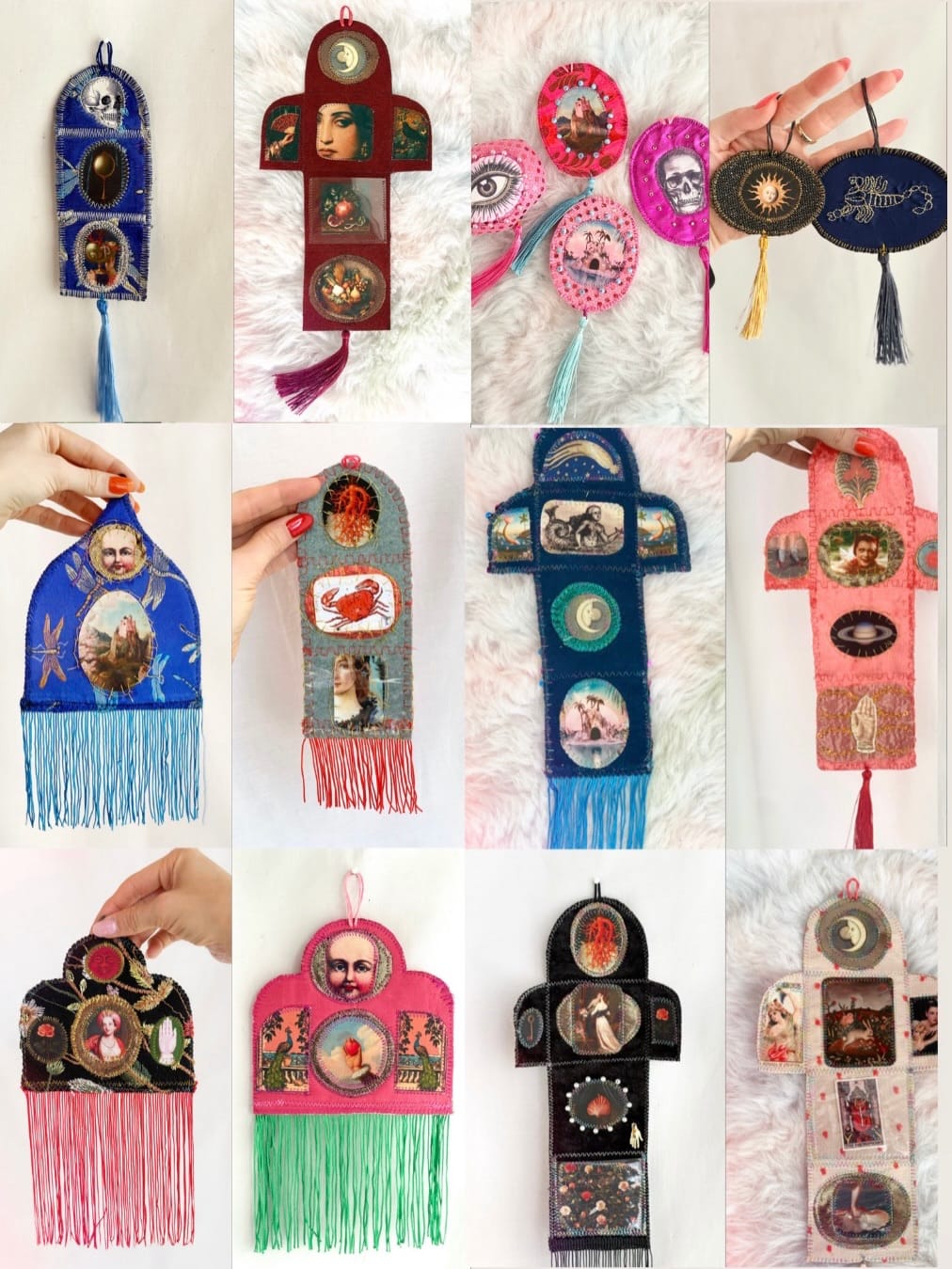
Tiny Altars, Secret Altars, Hiding in Plain Sight
You don't need a permanent altar, or a large one. An altar can look like a lovely assemblage of objects and blend in seamlessly with good interior design.
Many witches start with:
- a shelf
- a windowsill
- a bedside table
- a corner of a desk
- a corkboard
You can also begin digitally:
- a phone background
- a laptop desktop
- a private collage of images, colours, or symbols
You can also hide your altar in plain sight:
- inside a locket
- inside a small metal tin
- inside a deck of playing cards
- inside the front cover of a diary
Though the witch shop is appealing and the aesthetic is fun, remember: Witchcraft for beginners isn't about acquiring objects. It is about choosing what you return to.
Ask yourself:
- What has been asking for my attention lately?
- What do I keep thinking about, remembering, or circling back to?
Start there.
Because witchcraft is a nature-based spirituality, altars will often orient to the directions - North, South, East, and West. At those four corners we can build resonance by placing items that correspond (North-Earth/stones, East-Air/incense, South-Fire/candles, West-Water/chalice). Think of these correspondences as a sketch, you can learn fro the outlines of the associations drawn over centuries by other people feeling into the energies around them. But ultimately, deep power will come from the colours and connections you draw on your own.
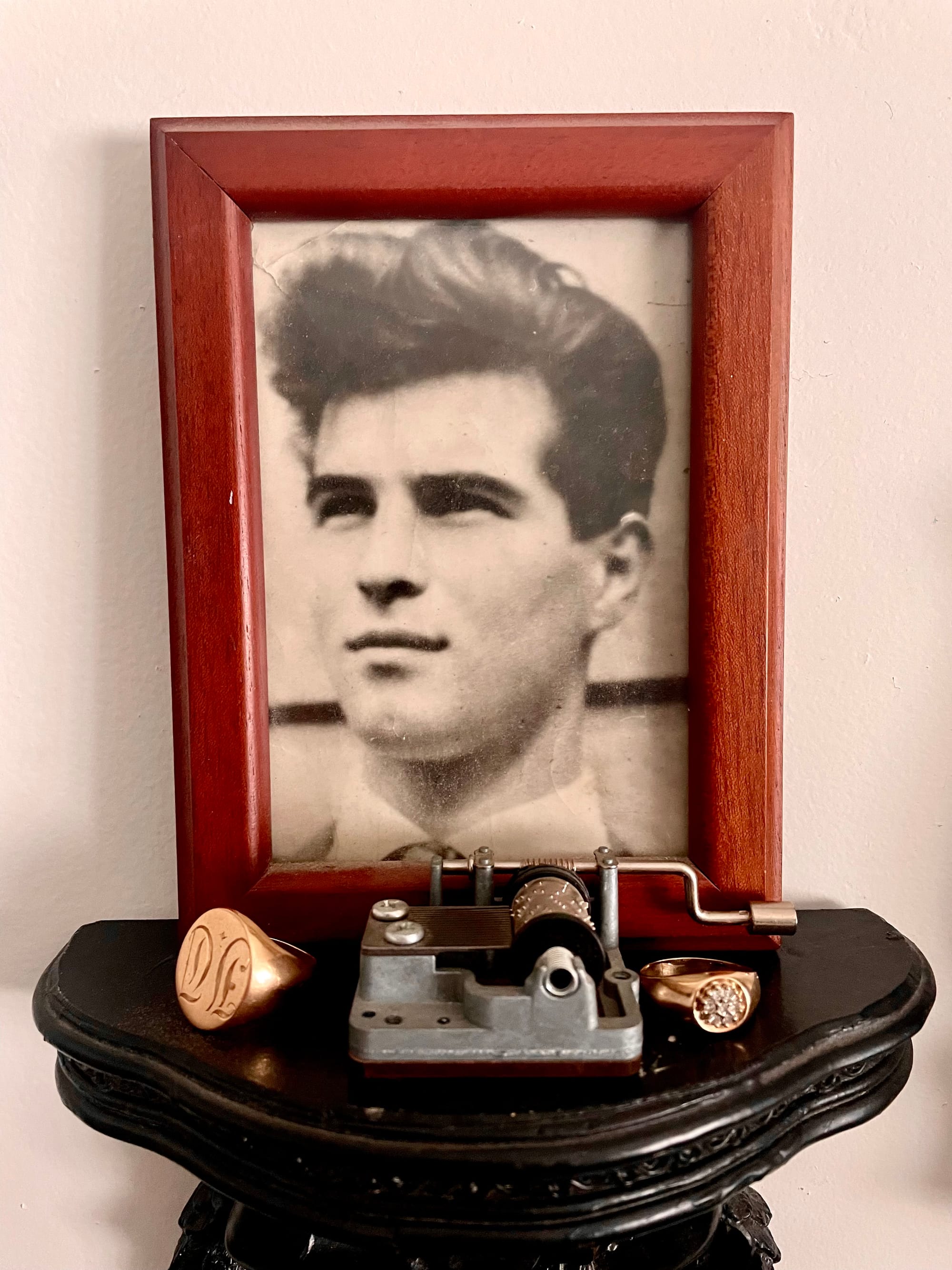
Ancestor Altars - Let Meaning Be Personal
Your altar might hold:
- a photograph of a relative
- an image of a chosen ancestor
- a stone from a place you miss
- a plant that feels strangely important
- an animal you keep noticing, without knowing why
You don't need to explain these choices — to anyone, including yourself.
People new to practising witchcraft often worry they are “making things up.” But all meaning begins this way: through repetition, memory, and emotional resonance. This is not a failure of imagination. It's how the subconscious speaks.
Having a wide open mind about ancestry, extending our view to imagine deep time and the way we are ancestors across species lines, sharing DNA and cellular histories with the more than human world, allows an ancestor altar to become an expansive map of kinship and connection.
Let your altar create a small believing space that whispers you are not alone.
And when you feel alone, go there. Bring drink or food or music or smoke. Bring a story or tears or just a wink and a smile. Let the return and repetition begin to build your altar's power in your life.
Altars as Art, Memory, and Meaning
Altars are not just religious objects, and making an altar doesn't have to mean you are worshiping a new god, or any divinity at all.
They have long appeared in contemporary art as sites of memory, identity, grief, resistance, and devotion. Looking to artists who work with altar forms can help beginners and baby witches, and all of us constantly exploring our craft, understand witchcraft not as fantasy, but as a serious way of arranging meaning.
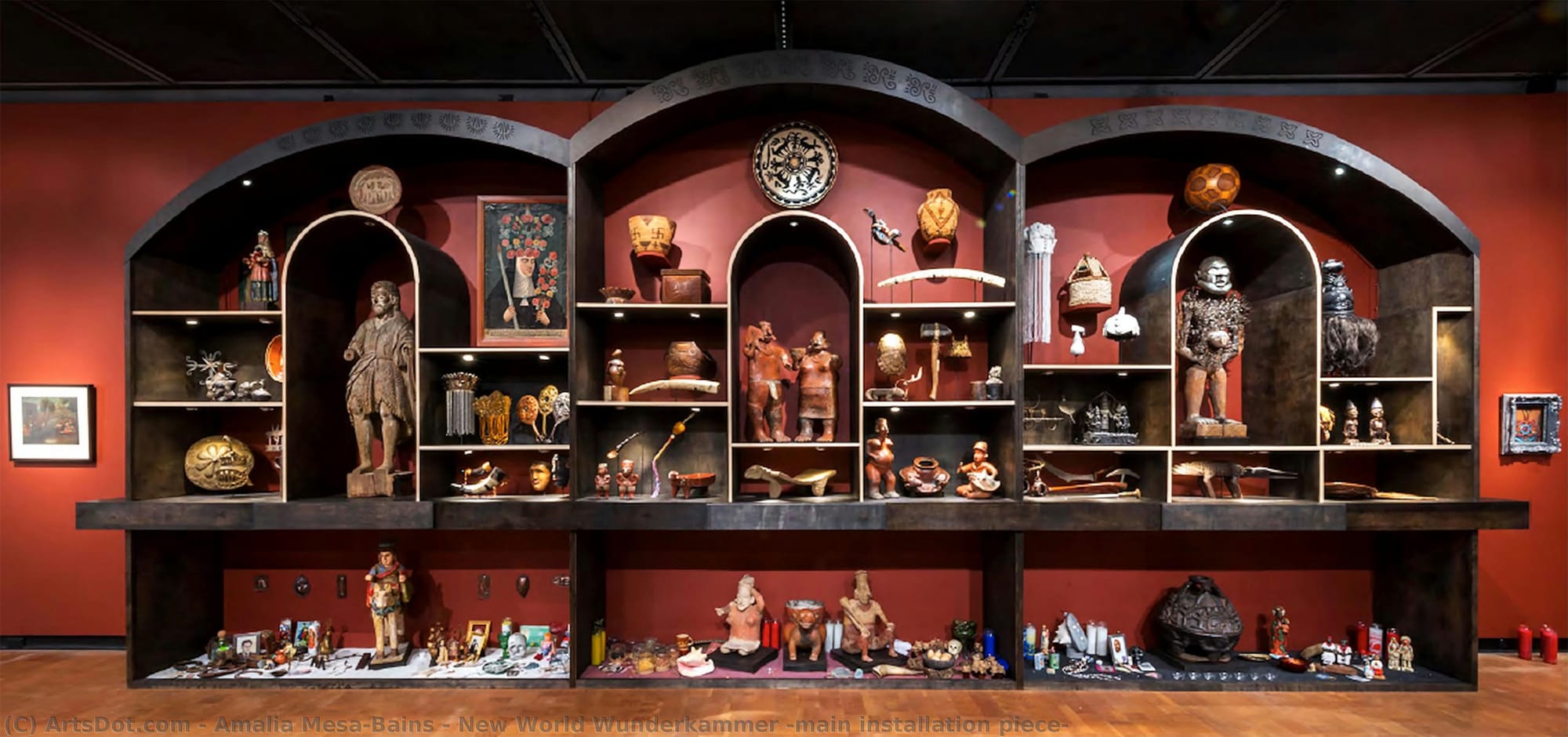
Amalia Mesa-Bains: Altars as Cultural Memory
Chicana artist Amalia Mesa-Bains is known for large-scale altar installations that draw on Indigenous, Catholic, feminist, and diasporic traditions. Her altars honour ancestors, intellectual lineages, and cultural survival.
They are layered and abundant, refusing minimalism in favour of remembrance. Mesa-Bains treats the altar as a political and feminist archive — a place where private devotion meets collective history. Her work offers permission to let an altar hold complexity: grief and beauty, rage and reverence, inheritance and invention.
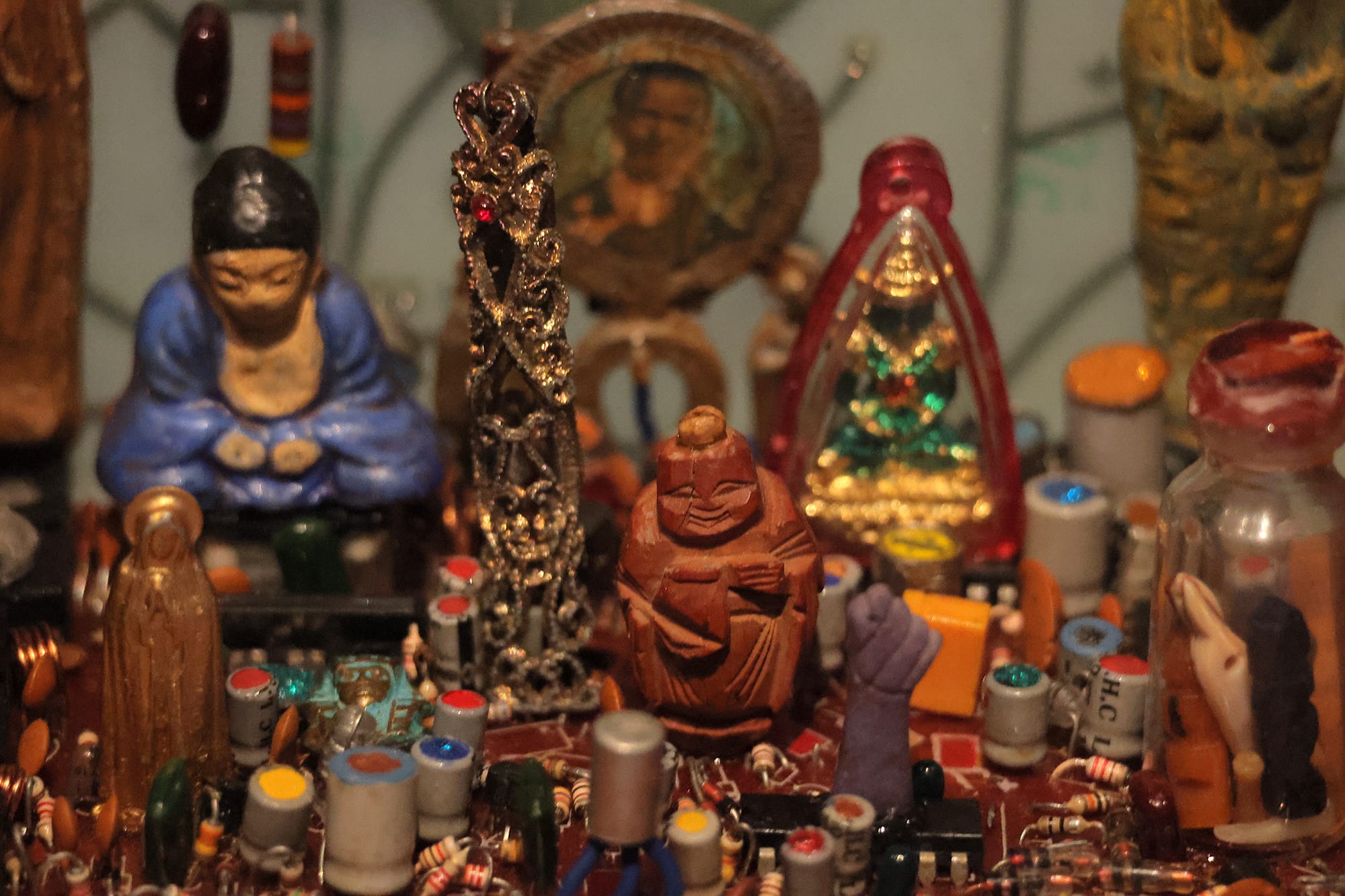
Betye Saar: Found Objects and Spellwork
Betye Saar’s assemblage work uses found objects, photographs, charms, and relics to create altar-like constructions that confront racism, mythology, and power.
Her work reminds us that witchcraft basics don't need to begin with purity or newness. They can begin with what's already been touched, discarded, and survived. Objects carry memory. Arrangement creates meaning. Repetition becomes ritual.
An altar can be made from what the world has already given you.
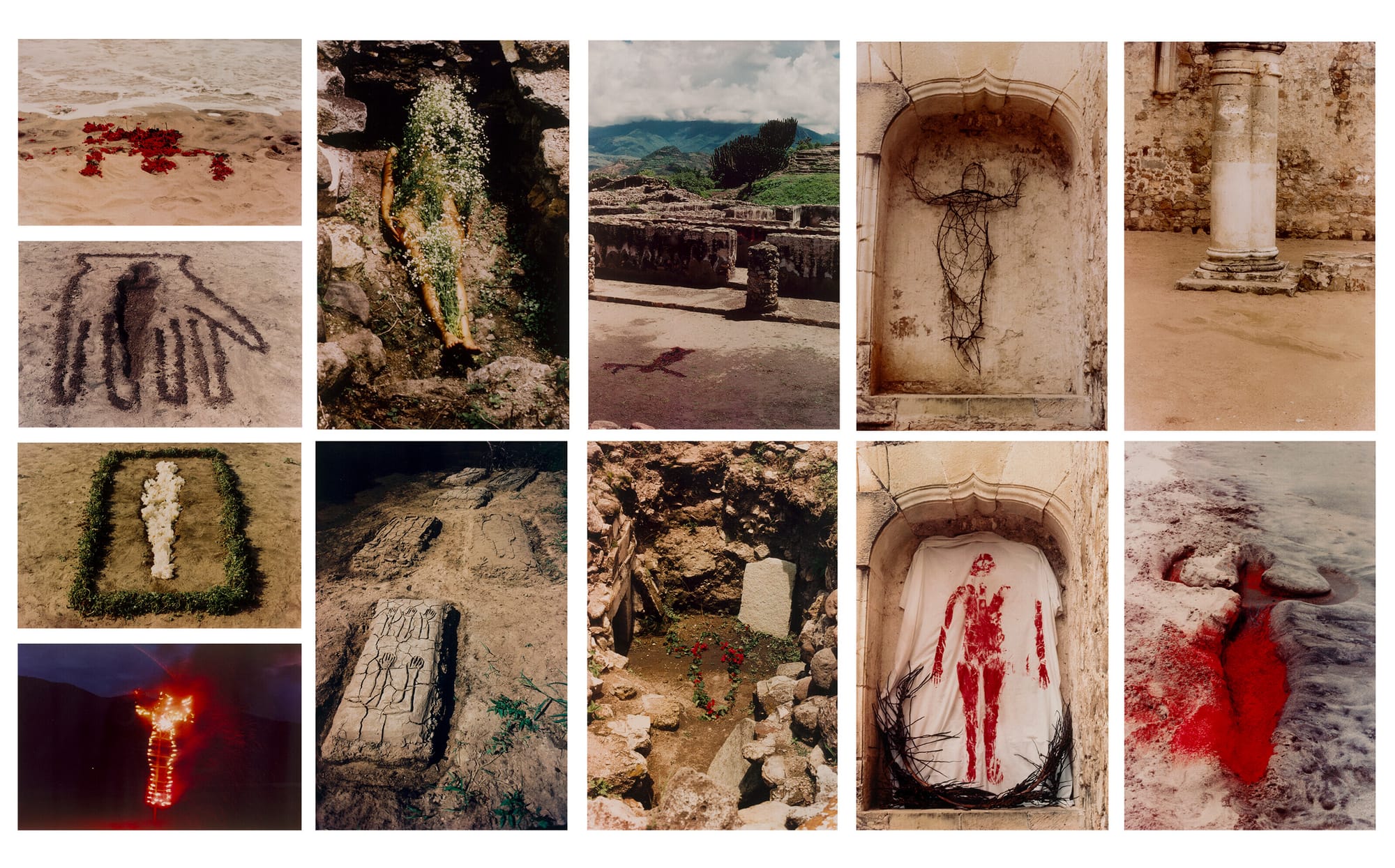
Ana Mendieta: The Body as Altar and Icon
Cuban-American artist Ana Mendieta often worked directly with the land and her own body, creating temporary, ritual-like forms that honoured ancestry, exile, and earth.
Her work expands the idea of altar beyond objects. The body, the ground, the act itself can become sites of practice. For those practising witchcraft who feel called to movement, gesture, or presence rather than display, Mendieta offers another beginning: you are already the site of devotion.
Your body is an ancestor. Your body is an altar to your ancestors. Every one of your cells holds an ancient and anarchic love story. . . . You are threaded through with fossils.
Sophie Strand, Your Body Is an Ancestor (via New Moon Magic. )
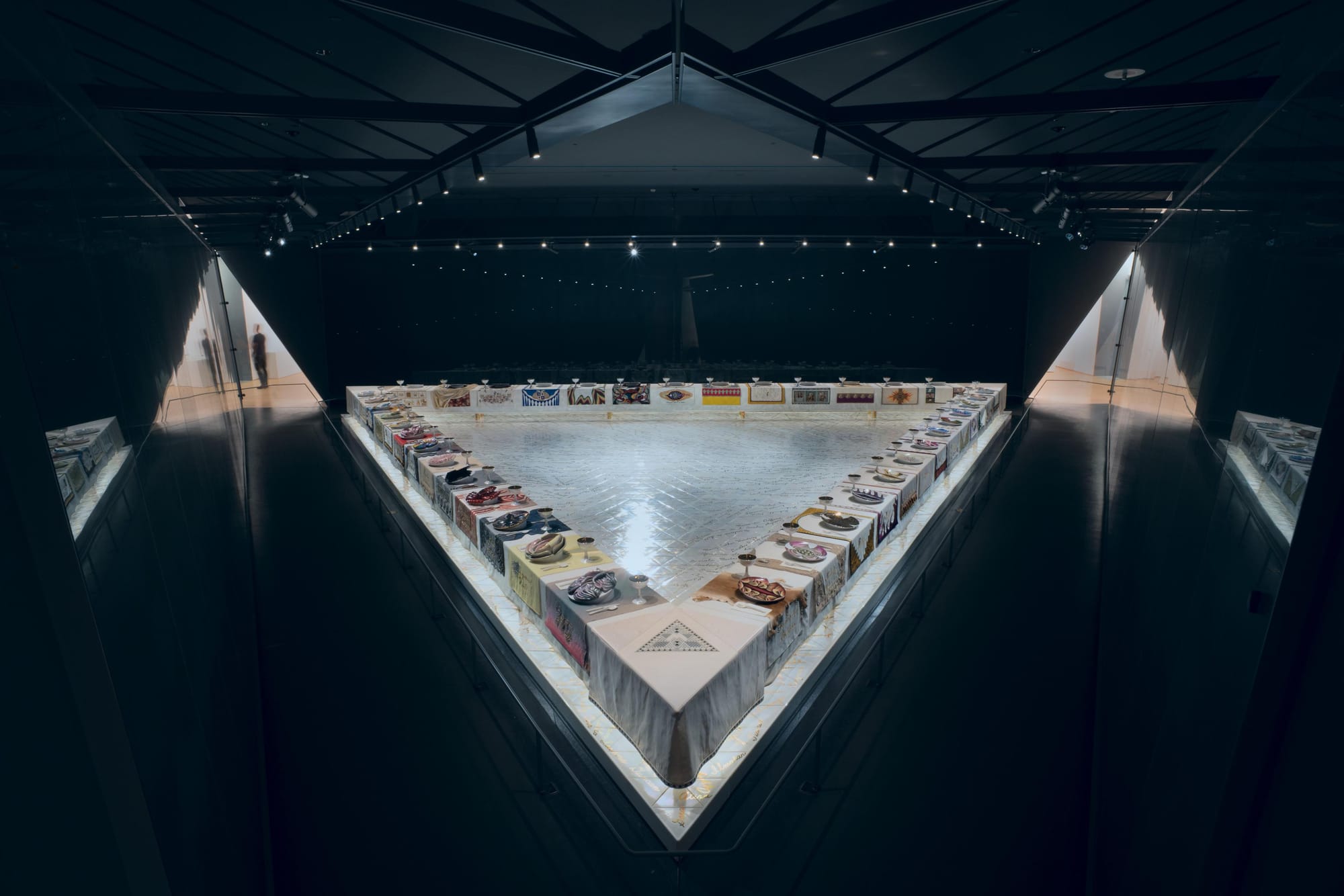
Judy Chicago’s The Dinner Party: The Altar as Collective Memory
Judy Chicago’s The Dinner Party (1974–79) is one of the most significant altar-like works of the twentieth century. The installation takes the form of a ceremonial table honouring women from history and myth who were excluded from official records, with nearly one thousand additional names inscribed beneath.
Seen through a witchcraft lens, The Dinner Party functions as a ritual of remembrance and a feminist cosmology. It is an altar not to a single deity, but to collective inheritance. It teaches that altar-making can be historical, collaborative, and political without losing its spiritual charge.
For beginners learning witchcraft, this offers a powerful reframing: remembering who came before you is itself a form of practice.
And practically, setting the table for someone you wish you could talk to, and then talking to them, is altar-making in a form that can be tidied away with the dishes at the end of the day.
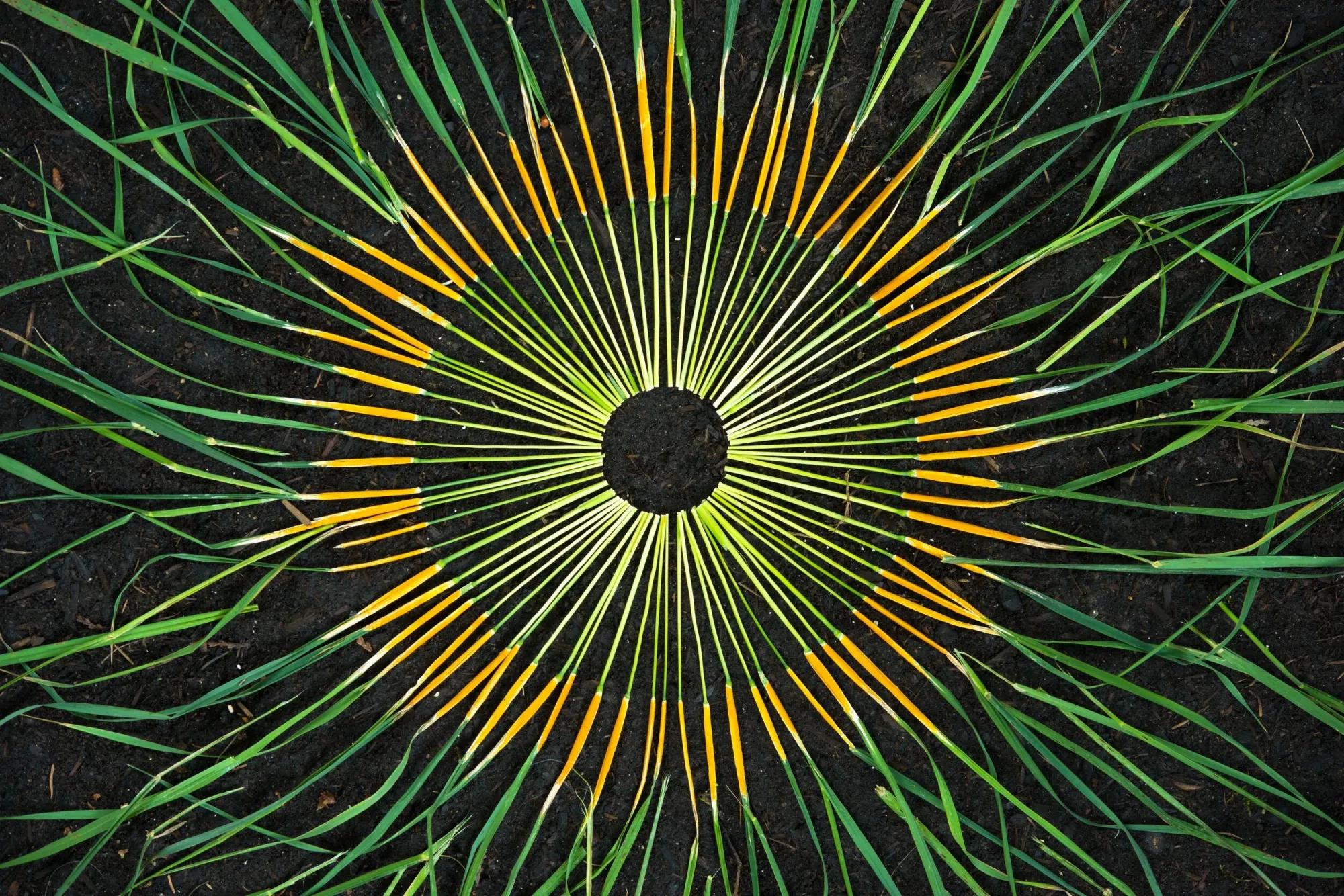
Nature Altars: Grief, Impermanence, and Letting Go
Some altars are not meant to last.
Contemporary land artist Day Schildkret creates what he calls morning altars: temporary arrangements made from leaves, stones, flowers, ice, ash, and whatever the land offers that day. He builds them as a way to process grief and change, then leaves them to be altered, scattered, or erased by weather, animals, and time.
These works are quiet, deliberate, and impermanent. Their meaning lies in the making — and in the letting go.
For beginners practising witchcraft, beginning to belive in ourselves as part of the magic making of Earth, this is an important reference point. Not all altars are about keeping or stabilizing meaning. Some are about:
- acknowledging loss
- marking transition
- practising release
Nature altars remind us that witchcraft doesn't resist change. Attention itself can be the ritual. Dissolution can be part of the work.
If you are drawn to altar-making during periods of grief, illness, or uncertainty, temporary altars — made outdoors or with materials you return to the earth — can be a gentle way to practise without asking yourself to hold on longer than you are able.
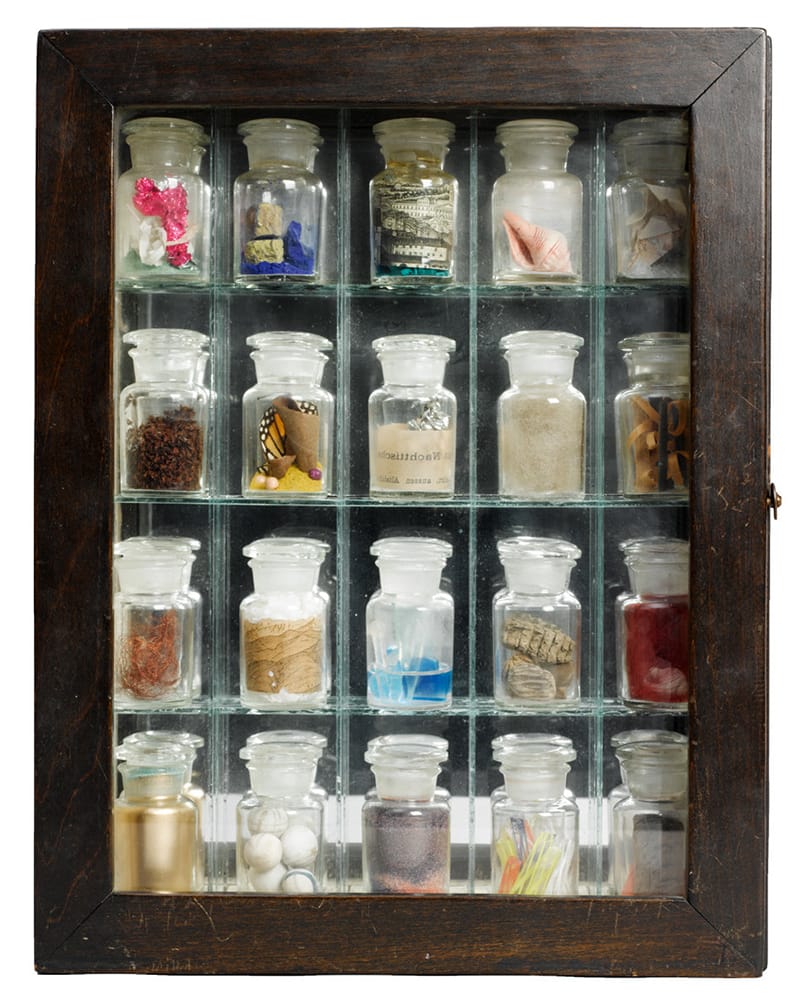
Boxes, Play, and the Sacred Ordinary
Joseph Cornell and Fluxus Experiments
Joseph Cornell’s shadow boxes offer one vision of the altar as an intimate, interior cosmology — small worlds built from images, objects, and repetition. His work invites stillness, contemplation, and private devotion.
The artists associated with Fluxus expand this idea in another direction.
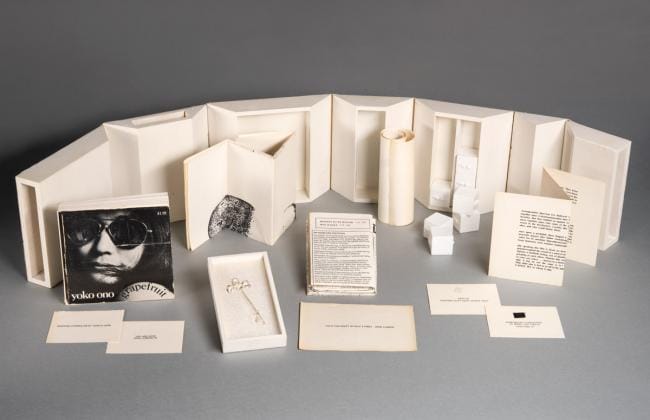
Fluxus artists in the 1960s and 70s often created small boxes, kits, and instruction-based works that blurred art, ritual, and play. These boxes might contain:
- simple objects
- written prompts
- absurd or poetic actions
- invitations rather than explanations
Fluxus work treats meaning as something enacted rather than displayed. The box becomes a site of participation, not reverence alone.
For beginner witches, this could be a liberating model. An altar doesn't need to be solemn to be sincere. It can be experimental. It can change daily. It can ask questions instead of offering answers.
Cornell and Fluxus together suggest that altar-making can be:
- contemplative or playful
- private or interactive
- symbolic without being fixed
A drawer, a matchbox, a digital folder, a rotating collection of images — all can function as sites of practice.
When Figures, Archetypes, or Energies Appear
As you spend time with your altar, you may notice certain figures or symbols emerging:
- a deity or mythic figure
- an ancestor or someone from your lineage
- an archetype that keeps appearing in dreams, books, or memory
You might find yourself thinking about them, or see images in your day to day that remind you, someone might mention them on TV or in passing on the bus. This does not have to mean you are being chosen, summoned, or tested. Often, it means your psyche is responding to something it needs — protection, courage, truth, rest.
In beginner witchcraft, exploration comes before commitment. Curiosity does not obligate devotion.
Practising Witchcraft as Attention
Many people searching for how to start witchcraft or how to practise magic expect instructions. Instead, begin with a practice of attention.
Sit near your altar. Notice what feels alive, uncomfortable, comforting, or resistant. Let thoughts arise without forcing interpretation.
This is witchcraft basics in its most durable form.
Power here isn't about control. It is the ability to notice, choose, and return. Build like a wave. This is the foundation of witchcraft for beginners, and it's enough.
Witchcraft, Wicca, and Other Paths
Witchcraft is a broad category of practices and worldviews that has existed across cultures and histories. Wicca is a specific modern religion with its own structure, ethics, and theology.
You don't need to practise Wicca in order to practise witchcraft. If you are beginning witchcraft, it is appropriate to move slowly, study widely, and let understanding emerge through experience rather than declaration.
Beginning Witchcraft Is Not About Becoming Someone Else
You don't “become a witch” all at once. You can practise without putting the label on. And whenever you want to, you can declare you are one. As artist and witch Edgar Fabián Frías told us, being a witch is magical because we are self-ordained.
You practise.
You notice.
You learn what responds when you listen.
You choose. You use your will. You watch how your truth and your choices altar the world.
An altar isn't the destination. It's a threshold.
If you're looking for a beginner witch guide, let this be it: start where meaning already lives, and let relationship teach you the rest.