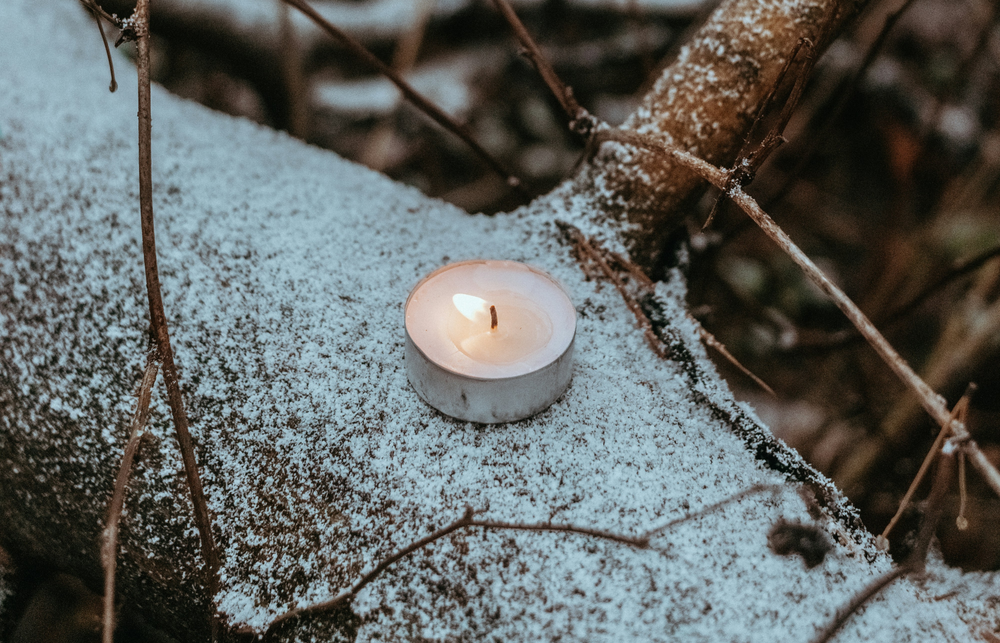
Insights from real witches on how we make meaning and ritual around the cross quarter days of Imbolc.
The days are cold. The ground is hard. But, by the tiniest of increments, the light has begun to grow. It's hard to even believe in it some days.
Observed by Pagans, Witches and groundhog enthusiasts in early February (at least, in the Northern Hemisphere) Imbolc sits between the deep dark of winter and the first visible signs of Spring. Imbolc rituals centre handcraft, tending fires, keeping the hearth, looking for first signs of change. At Imbolc we practice keeping hope alive. Imbolc meaning is for each celebrant to craft for themselves, because at it's heart it is a celebration of attention — to the first milk, the first moments of melt, to what is the Sun and Moon for you, to what's fragile, to what asks for care before it can grow.
For Witches, poets, farmers, and hearth-keepers across time, Imbolc has been a moment to honour the unseen work of our more than human kin, of lambs and roots and bodies, and to commit again to living in relationship.
This isn't a festival of urgency.
It's a practice of patience, and of attunement.
Like Samhain, Beltane and Lughnasadh (or Lammas,) Imbolc as a cross quarter day between Solstices and Equinoxes - an ancient set of diverse practices re-invented and reclaimed by modern pagans and nature based practitionners - is a threshold time, a liminal time, a tilting time and so, for Witches, it's a time when divination (marmot-based or otherwise) can give us windows into what's on the horizon, and spellwork can help us gently guide what is becoming.
Imbolc is the halfway point between the Winter Solstice and the Spring Equinox: February 2nd. It is not the new and glorious world of a budding spring, but rather, the promise of a new world. Past the point of longest nights, we are still here. We are awakening. Opening and adjusting our eyes. Inspecting our shrinking shadows. Preparing. Scratching at the dirt, collecting and gathering, building a foundation out of what remnants we can find, fueled by our faith that a new dawn is possible. Anticipating the coming melt, we carve paths of least resistance in the snow. We direct the flow.
- Missing Witches: Reclaiming True Histories of Feminist Magic
What Is Imbolc or Imbolg?
Imbolc Meaning, Timing, and Tradition
Imbolg or Imbolc (pronounced IM-bolk or IM-olc) is a seasonal festival traditionally observed around February 1–2, roughly halfway between the winter solstice and the spring equinox.
The word is often linked to Old Irish terms associated with milk, pregnancy, and ewes beginning to lactate — signs that life is stirring even when the landscape still looks bare.
Imbolc has been associated with:
- the return of light
- the tending of hearth and home
- purification and preparation
- early agricultural awareness
- the figure of Brigid, connected to poetry, healing, craft, and care
Rather than a “new beginning,” Imbolc invites us into a threshold: a space where nothing is finished, and nothing is fully formed.
Our Imbolc rituals do not need to be elaborate. Imagine you are tending new born bunnies and baby lambs and keeping the fire going. Rest a lot, pay attention to your day dreams.
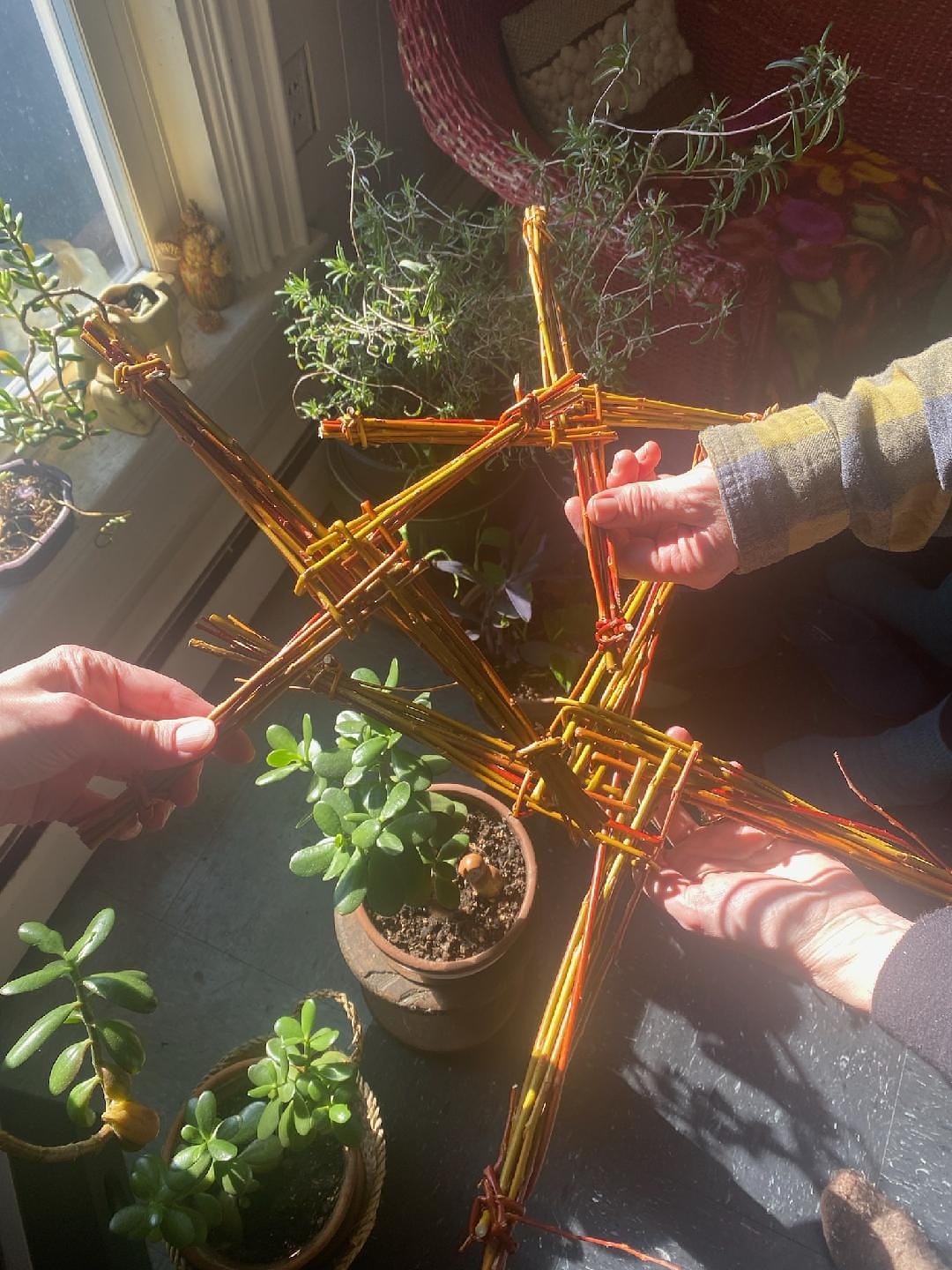
Each Imbolc, I make a new Brigid’s Cross out of willow for my entryway.
They’re traditionally made of rushes, which is a hollow grass that grows all over North America and globally, near swamps and other wetlands.
Brigid’s crosses are usually hung in homes (or in barn rafters) to bring Brigid’s blessings into the home (or livestock dwelling), including protection from evil, fire and hunger. They’re replaced each year on Imbolc.
I also go and sing to the beautiful rock-lined spring that provides my drinking water. (She is named after Brigid!)
- Rose, of Brigid's Spring
Many Ways of Marking This Turning: First Light Rituals Across Cultures
While Imbolc is culturally specific, humans across many places and many centuries have marked this period of the year as significant — often through practices of renewal, care, and relationship with land and ancestors.
Rather than collapsing these traditions into sameness, we can notice shared human responses to season and survival. Here's just a few:
- Lunar New Year (across East and Southeast Asian cultures and diasporas) centres cleaning, ancestor honouring, food, and continuity — tending home and lineage as sacred work.
- Tu BiShvat (the Jewish New Year of the Trees) attends to sap rising, roots, and ecological responsibility, reminding us that growth begins invisibly.
- Setsubun (Japan) marks a seasonal threshold through ritualised boundary-making, protection, and preparation for change.
- Sadeh (Iranian / Persian tradition) honours fire as communal survival — warmth kept together through winter’s danger.
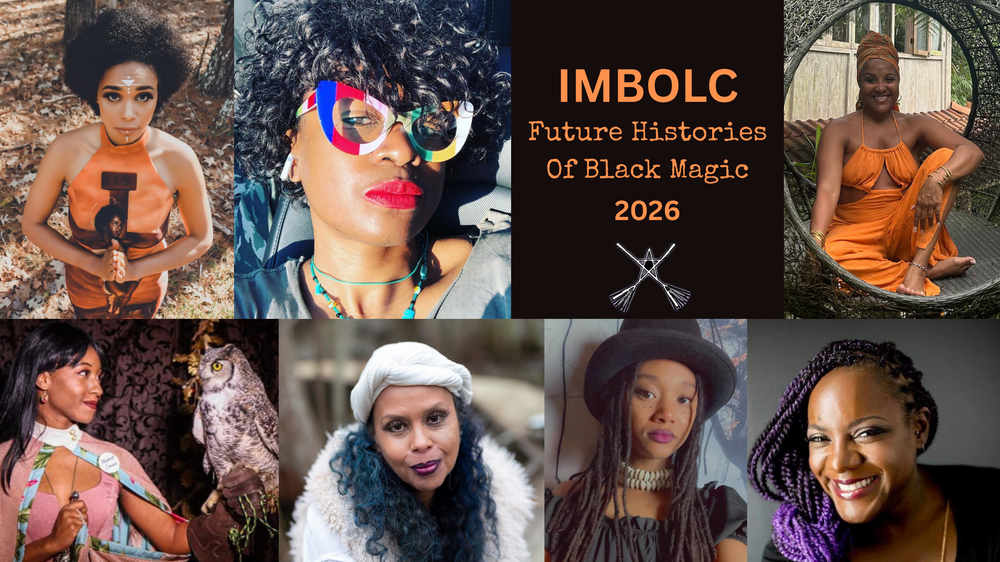
At Missing Witches, we've made it a tradition to listen to Black Witches at Imbolc, and all throughout February as we honour Black History Month.
Listen Now:
Future Histories of Black Magic 2025
Future Histories of Black Magic 2024
Future Histories of Black Magic 2023 Part 1
Future Histories of Black Magic 2023 Part 2
Imbolc in the Southern Hemisphere
Remember, we're bodies on a body that is turning and it's not winter everywhere.
In the Southern Hemisphere, Witches might choose to celebrate a version of Lughnasadh or Lammas in February, as this is the opposite moment on the Wheel of the Year.
Where Imbolc is Before Spring — a Pagan Celebration of the first faint stirrings that whisper that the green days will return — Lammas is Before Fall, a moment so full of Summer, of life, fat on the vine, grain harvested, that we only barely just begin to taste the cold of death on the wind.
Whether you are a Witch or not, being drawn to a Nature-based spirituality means taking the time to feel these moments when the seasons remind us with the softest whisper that they will turn again. We notice the record turning and feel into where we can deepen the grooves.
Listening to local land matters more than following inherited calendars.
Imbolc is just another invitation to be rooted, to feel the wind on your face and listen to the birds. Stay at the threshold, see what it tells you.
Imbolc Fire Rituals
Candles and the Returning Light
"A sacred fire burned in Kildare reaching back into pre-Christian times. Scholars suggest that priestesses used to gather on the hill of Kildare to tend their ritual fires while invoking a goddess named Brigid to protect their herds and to provide a fruitful harvest." Brigidine.org
At this time of year, light is practical. It warms. It allows work to continue. It gathers people into shared space.
Simple Imbolc fire practice
- Light a candle or tend an existing flame.
- Sit with it without speaking for a few minutes.
- Notice what in you feels cold, tired, or thin.
- Notice what still holds warmth.
- Repeat it daily, lighting it each day when the sunsets. Notice how the time of sunset moves a little each day. Breathe into the feeling of spinning, tilting. Imagine the Earth as a young girl, and also an old crone. Dancing.
This isn't about setting intentions.
It is about witnessing what persists.
One of my favourite rituals on Imbolc was re-ighting our pilot light (gas furnace and stove), as they act as our hearth fire, with a candle from a sacred flame ritual we did with our kids (who are now adults, so long ago). My youngest called our ancient furnace light Calcifer, from Howl's Moving Castle. He used to be scared of the flame in it until we relit it after I wiped it out a bit. (It looks like a time machine from a 1960's movie or Dr Who episode, but our landlord used to swear it was new!) It was a hands on way for our kids to see how magic is also daily life. Once I took a forgery class to honor the smithcraft aspect of Brigid, and when I was in a (different) coven we made vows to one another and each other, wrote poetry, and tried out divination with water scrying (holy well) and fire (sacred flame).
- Kaite B.
The Hearth as Sacred Work: Imbolc Home and Hearth Rituals
Making gentle domestic magic
Imbolc is associated with nurturing the home — cleaning, repairing, preparing, and making space.
These acts aren't separate from spirituality. They are the ritual.
At Imbolc, domestic labour can be approached as:
- an act of care rather than productivity
- a conversation with the space that holds you
- a way of honouring those who kept homes before you
Sweeping, washing, and reorganising can become sacred when done slowly and with attention. But these can be saved for Spring. On cross quarter days, tiny stitches of mending are enough, a reminder to slow down. Dice vegetables in deliberate delicate squares and stir the soup with dreams in your eyes. Tap into the part of you that is strong and immovable like glaciers, patient like ice ages, deep and sintering with your community even in the dark of night, like snow pack.
At Imbolc the hearth — whether literal or symbolic — reminds us that survival is collective, and that care is not small work.
Start small seedlings, or put green onion bulbs into a little glass of water.
Remember that light is returning and life is not done surprising us yet.
Brigid: Care, Craft, and Continuity
Brigid traditions and the ancient Goddess.
Pagan Brigid is a major pre-Christian Irish goddess, part of the Tuatha Dé Danann, deities who walked on Earth in the ancient stories. She was revered for wisdom, poetry, healing, smithcraft, fire, and fertility, often seen as a triple goddess with aspects of a maiden, mother, and crone. Her worship merged with St. Brigid of Kildare, and Imbolc honours her sacred fire.
Brigid is a contradictory saint, both a convert of St. Francis' and midwife to the baby Jesus. Clothed in the religion of the colonizer, she still keeps a more ancient flame alive.
At Imbolc we revere an archetype that spirals back to the Palaeolithic Horned Goddess and Elen of the Ways. Brigid both tends the home fire and invites us to take the road less travelled.
In your Imbolc observance, watch for invitations to think and act in ways that embrace the both/and nature of the cross quarter days. Notice the binaries that shape your thinking and see how it feels to move in the space between them.
Brigid is associated with:
- healing and midwifery
- poetry and inspiration
- smithing and craft
- protection of the home
Rather than approaching Brigid as an object of devotion, many contemporary practitioners engage her as a relational figure — a symbol of continuity between care, creativity, and labour.
To work with Brigid at Imbolc can mean:
- honouring the work of hands
- valuing skill and repetition
- recognising care as sacred knowledge
Recently while I was doing some research for my trans-centric Imbolc ritual, I learned that St. Brigid was queer and had a lifelong lover, Darlughdach. I’m now interested in the idea of making matching Brigid and Darlughdach dolls. Because any time I can further queer the wheel of the year, I am down for it.
- Kate W.
Imbolc as Threshold, Not Resolution
Imbolc is often misunderstood as an early spring festival. In reality, it's a lesson in not arriving too soon.
The ground may still freeze. The weather may worsen. Hope, at this stage, must be quiet to survive.
Imbolc invites us to practise:
- restraint instead of manifestation
- attention instead of optimism
- preparation instead of declaration
What are you willing to tend without proof? What are you committed to protecting when the ICE comes?
Embodied Imbolc: Somatic Rituals and Listening to the Body
Imbolc is a bodily season.
It reference first milk, childbirth and its heart ache and danger as well as its bliss and joy. Brigid is a figure of fertility in the Pagan sense, not just woman as baby-maker, but as metalsmith, handcrafter, firetender, poet. Notice what is fertile in your body, what your limbs can make and hold, and also, notice what it costs you.
Energy may return unevenly or not at all. Pain, illness, grief, or fatigue may still dominate. This is not failure — it is information.
Embodied Imbolc practice
- Place a hand on your chest or belly or breast.
- Notice warmth, tightness, movement, or absence.
- Ask quietly: What is stirring? What is resting?
No answers are required.
The body often knows the season before the mind accepts it.
Tending What Is Fragile
For many of us, Imbolc arrives during ongoing grief, illness, or uncertainty. The promise of “new beginnings” can feel distant or even cruel.
Imbolc offers a different ethic:
tend what is still alive, even if it is small.
This may look like:
- resting instead of planning
- lighting a candle for someone who is suffering
- choosing continuity over change
Hope at Imbolc is not loud. It survives because it is cared for.
Why This Work Deepens in Community
Seasonal practice gains strength through repetition and shared language.
Practising together does not mean agreement or certainty. It means:
- returning to the work again and again
- being witnessed without performance
- allowing meaning to unfold over time
Many witches practise alone for years before seeking others — not for answers, but for companionship in the work.
If you are drawn to this pace, this attention, this refusal of spectacle, you're not alone.