Yule and the Winter Solstice arrive at the most honest point of the year. We are huddled in the dark together, and we cannot hide. The longest night doesn't promise ease or cheer. It marks a reality: the sun has reached its furthest edge, and life has drawn inward to endure. Here on these old mountains in Québec, on never-ceded Anishinaabe territory, in these cancer bodies, gendered bodies, anxious, tired, life-giving, sorrow-filled, laughter bubbling bodies, we feel the ancient dark pressing against our windows.
We light candles in the mornings when we wake up and it's still dark.
The cold creeps in through every stitch, between our cells, settles in our bones, and we sit with it, make our offerings material and magical, and then turn our faces toward the slow arc of light returning.
To be rooted where we are, to turn off the noise and to reach with all our love into this place, this chosen family, these four walls, the food we can muster and the gifts we can share, is to enter the season with reciprocity — tending relationships, the land, ourselves, and the webs we inhabit.
For those devoted to land-based spiritual practices, for witches, for all those paying attention, this season is rich in invitations to make reparations: material, ecological, and relational. This season is a cosy timeless vibe and a harsh reality. A time we need each other so much we ritualize our gifts. Winters have always been dangerous. Survival has always depended on story, song, care, and community.
This page offers Yule rituals, Winter Solstice practices – crafts, songs, things we've gathered or invented to help us survive and make meaning — ways to remember the spiral: light grows, tides turn, fascists and abusers die, and our magic survives. But remember, the simplest way to make magic this season is to give. Bake for a neighbour, bring sweaters, coats, blankets, tampons, warm socks to a shelter, set up a recurring donation even if it's 5$, crochet a scarf and leave it on a lamp post with a note: For You, Whoever Needs This. I Love You." Care is the deepest form of magic, and an offering we can make to the warmth that promises to return.

Yule, the Twelve Days, and Seasonal Timekeeping
Yule is not a single, fixed tradition. It is a braided term, shaped over centuries by Norse, Germanic, Anglo-Saxon, and later Christian calendars, layered unevenly across regions and time. What unites these practices is not uniform ritual, but attention to seasonal duration — the understanding that the solstice is not a moment to be consumed, but a threshold to be inhabited.
In pre-industrial northern Europe, midwinter was dangerous. Food stores were low, cold was persistent, and survival depended on collective pacing rather than productivity. Seasonal observances stretched across multiple days, often beginning around the solstice and continuing until early January. These periods allowed time for rest, storytelling, feasting when possible, oath-making, reconciliation, and careful watching of weather and animal behaviour.
The so-called Twelve Days of Yule reflect this elongated sense of time. Rather than marking a single holy night, these days acknowledged that change unfolds slowly. Light does not return all at once. The sun’s movement is subtle, almost imperceptible. Rituals mirrored this reality: repeated fires, ongoing hospitality, nightly observation, and acts of care sustained across days.
Some traditions treated the twelve days as a liminal interval, outside ordinary time. Work slowed or paused. Divination, dreaming, and reflection were understood as appropriate during this threshold, not because it was magical in a modern sense, but because ordinary rhythms were already disrupted by winter itself.
Later Christian calendars absorbed and reshaped these practices, aligning the twelve days with Christmas and Epiphany. Earlier agricultural and cosmological meanings were not erased so much as translated, sometimes awkwardly, sometimes violently. What remains visible is the persistence of the idea that midwinter requires duration, not spectacle.
For contemporary practice, especially outside the cultures from which these traditions emerged, this history invites restraint and reciprocity. Rather than reenacting specific rites, we can honour the deeper pattern: slowing down, extending care across days, marking time through repetition rather than novelty, and allowing the solstice to be a process rather than an event.
Here in Québec, where winter shapes bodies and infrastructures alike, this long-view approach matters. The twelve days remind us that endurance is collective, attention is renewable, and light returns on its own schedule — not ours.
Cross-Cultural Midwinter Traditions and the Long Solstice
Across cultures, midwinter has rarely been marked as a single night. Instead, it has often been understood as an extended threshold — a stretch of days in which ordinary time loosens, work slows, and attention shifts toward ancestry, community, and survival. What later became known in Christian Europe as the “Twelve Days” draws from older seasonal logics rather than one unified pagan calendar.
Below are historically attested or well-documented folk traditions that illuminate how humans have lived with the solstice as duration rather than event.
Mōdraniht (Mothers’ Night)
Anglo-Saxon England
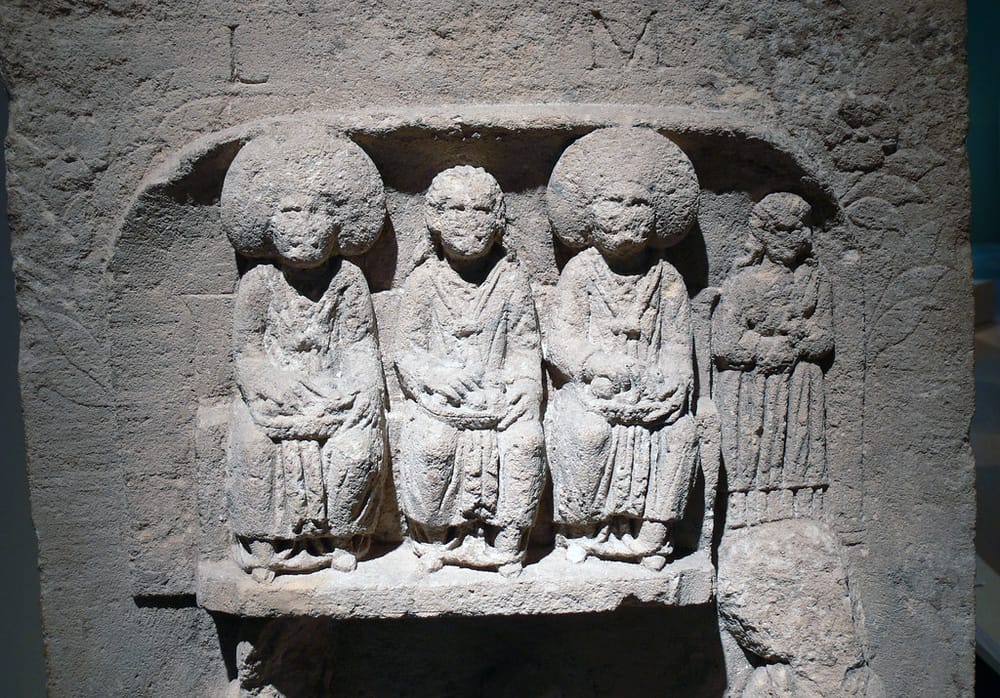
Mōdraniht is recorded by the 8th-century monk Bede as a pagan midwinter observance held on or near the solstice. The night honoured ancestral mothers or female protective spirits. Scholars understand it as a rite of protection, lineage, and continuity at the most vulnerable time of year.
Likely elements included offerings, feasting, and ritual attention to ancestry rather than spectacle.
Jól / Yule
Norse and broader Germanic regions
In early Norse sources, Yule (Jól) appears as a multi-day midwinter feast, not a single ritual night. Celebrations included communal drinking, toasting, storytelling, fire-keeping, and hospitality. Hearth fires were maintained, and ale or mead was ritually shared to honour gods, ancestors, and kin.
The length of Yule varied by region and era, but its extended nature reflects a winter reality: survival required ongoing mutual care.
Saturnalia
Ancient Rome
Though Roman rather than Germanic, Saturnalia strongly influenced later European winter customs. Originally lasting one day, it expanded to a week or more by the late Republic. Saturnalia involved feasting, gift-giving, role reversals, and public celebration — a ritualized disruption of social order during the darkest season.
It modelled winter as a time when hierarchy softened and community cohesion mattered more than productivity.
Koliada
Slavic regions of Eastern Europe
Koliada refers to a cycle of midwinter celebrations stretching from late December into early January. Groups travelled from house to house singing ritual songs (koledy), offering blessings for prosperity and protection in the coming year. Food, drink, or small gifts were exchanged.
These songs linked solar return with community wellbeing and were often performed over multiple nights.
Wren Day
Ireland, Wales, Isle of Man, parts of Britain and France
Observed on December 26 or Twelfth Night (January 5), Wren Day involved processions, music, and symbolic acts centred on the wren, a bird associated with sovereignty and seasonal change. While the original bird hunt is no longer practised, historical accounts describe masked processions and communal visits to households.
The tradition reflects midwinter as a liminal period, when boundaries blur and community ritual reasserts social bonds.
Dongzhi Festival
China and East Asia
Dongzhi is a winter solstice festival documented as early as the Zhou dynasty. Rather than marking darkness alone, it celebrates the return of yang energy and increasing daylight. Families gather, honour ancestors, and eat tangyuan — glutinous rice balls symbolizing reunion and wholeness.
While not framed as “pagan” in Western terms, Dongzhi offers a clear example of solstice as cosmic balance and relational repair, often observed across multiple days.
Shab-e Yalda
Persian / Iranian cultural sphere
Shab-e Yalda marks the longest night of the year and has roots in pre-Islamic Persian cosmology. Families and communities stay awake together through the night, sharing fruit, nuts, and poetry, especially the work of Hafez. The vigil itself is the ritual: witnessing darkness until dawn returns.
The night honours endurance, intimacy, and the slow victory of light without denying the depth of the dark.
Soyal
Hopi and Pueblo Peoples of the American Southwest
Soyal is a sacred winter solstice ceremony marking the sun’s return and the renewal of life. It involves prayer, purification, community preparation, and the making of prayer sticks. Ceremonies take place in kivas and are oriented toward balance, protection, and the continuation of the world.
This is not a public festival but a community-held responsibility tied to land, cosmology, and survival.
Midwinter Ceremony
Haudenosaunee (Iroquois Confederacy)
The Midwinter Ceremony takes place following the solstice and is one of the most important ceremonial periods of the year. It lasts several days and centres on thanksgiving, dream sharing, healing, renewal, and restoring right relations within the community.
Though not always fixed to the solstice date itself, it is fundamentally a longest-night response — acknowledging winter as a time for repair, reflection, and communal responsibility.
Chaomos (Chawmos)
Kalash people of present-day Pakistan
Chaomos is a winter solstice festival lasting several weeks, marking the end of the old year and the return of light. It includes purification rites, bonfires, music, feasting, and ancestral remembrance. The festival emphasizes community cohesion and protection during the harshest part of winter.
Chaomos treats the solstice not as a moment, but as an extended ceremonial season.
Indigenous Arctic and Subarctic Solstice Observances
Inuit and Sámi regions (varied traditions)
In Arctic regions where the sun disappears entirely, the solstice has been marked through quiet observance, storytelling, communal presence, and ritual attention to survival. Rather than large ceremonies, practices emphasized staying together, conserving resources, and maintaining relational bonds during polar night.
These traditions centre endurance, kinship, and ecological attunement rather than spectacle.
Reading These Traditions Together
What these longest-night traditions share is not form, but orientation:
- Staying awake together
- Slowing time across days
- Honouring ancestors and future generations
- Protecting community during ecological vulnerability
- Trusting that light returns without coercion
For contemporary practice, especially outside these cultures, the invitation is not to replicate, but to learn from the pattern: presence over performance, duration over event, relation over consumption.
Here in Québec, and across our global coven, we meet this moment differently — but still together — tracing ourselves toward each other in the dark, and toward the quiet where we can listen.
The Twelve Days as Liminal Time
The idea of twelve days between solstice and early January appears across multiple European folk calendars, later formalized in Christian tradition as the time between Christmas and Epiphany. Earlier agricultural and cosmological meanings likely included weather watching, divination, dreaming, reconciliation, and rest.
What matters historically is not a rigid ritual schedule, but the shared understanding that midwinter required slowness, repetition, and care over time. Light returned gradually. Ritual mirrored that pace.
A Note on Contemporary Practice
Many modern “Twelve Days of Yule” guides are recent reconstructions. While they can be meaningful, they are not direct continuations of ancient practice. A historically grounded approach honours the deeper pattern instead: extending care across days, tending fire and food, keeping company with darkness, and resisting the pressure to compress transformation into a single moment.
Here in Quebec, where winter still shapes bodies, infrastructure, and survival, this long view invites reciprocity — with land, lineage, and each other.
Solstice, Yule, and Midsummer Across the Hemispheres
The Winter Solstice is the astronomical pivot of the year: the shortest day, the longest night. Across cultures, across eons, it mattered because it shaped survival. The sun will return. The sky keeps its promise.
Yule, in Northern Hemisphere traditions, marks midwinter. Rituals honour returning light, the slow rebirth of the sun, the measuring and sharing of our stores, the taste of all our labour and all the Earth's generous flourishing from the year before. We honour the way we need each other, the way our lives are tied to each other with red ribbons.
In the Southern Hemisphere, this same solstice is midsummer — the day of highest sun, abundant growth, and long light. Plants, animals, and humans alike move differently under its arc.
Ecosystems don't obey human lines, at best we draw their outlines in caves trying to capture their traces as they go running past us, through us. They spill across borders, calendars, and marketing seasons.
In our coven, and in many online circles, we meet from all around the world — different daylights and temperatures, different plant and animal kin in circle with us. We celebrate Winter Solstice and Midsummer together. We borrow these Wiccan rituals, Yule, Litha, a pastiche made in the 50s-70s, rooted in specific places and borrowed from other cultures, but they don't define us. They are ways to trace ourselves toward each other in darkness or blinding light. Toward the circle. Ways to create the quiet where we can hear each other.
To stop and remember: we are part of the heaving dance life of Terra, of Gaia. However you choose to craft or improvise your celebration of these days, let's use these moments to sing I love you to the world and reach for deeper relation.

Missing Witches: Yule & Winter Solstice Episodes
Every year, we return to Yule. We sang punk versions of carols, waved at Santa in very low budget holiday parades, sat with candles and told stories together for a decade before starting the Missing Witches podcast, so we continue to celebrate now in that gleeful spirit. These episodes are seasonal gatherings shaped by story, song, poetry, the gathering of chosen family, the widening of our circle.
Missing Witches Coven Yuletide Special 2024
Every year the Missing Witches Coven gathers together at Yuletide to share our warmth, our cheer, our hopes and our fears, our stories, songs, and poems,\; to light each other's paths through the dark time of the year. Welcome to The Missing Witches Winter Solstice Celebration and Yuletide Special!!
Missing Witches 2023 Yuletide Special and Solstice Party
Twice makes it a tradition! Once again, we gather with the coven and invite you to make yourself a cup of tea, imagine sitting by a cozy cracking fire with your coven for Winter Solstice.
Missing Witches Yuletide Special 2022: Happy Talking Together (Santa Is A Mushroom)
The Missing Witches Coven gathers together for the first time to sing and tell stories for Winter Solstice - the longest night of our year. Folklore, humour, and ancestral mutation sparkle in the night.
Missing Witches Yuletide Special 2021: A Council of Soul Mates
In this episode it's just Amy + Risa, co-founders of Missing Witches, talking about the coldest season and the great gift of reminding each other who we are.
Missing Witches Yuletide Special 2020 w/ Jinkx Monsoon & Kenneth Friend
After winning RuPaul's Drag Race the first time, and before returning to win Queen of All Queens in the name of Hekate Queen of the Witches, Jinkx unmasks with Missing Witches and her best friend, Kenneth Friend.
Missing Witches Yuletide Special 2019! Chosen Family with Monefa and the Gahds!! Five Years before Uma Gahd starred on Canada's Drag Race, she brought the magic of chosen family to the Missing Witches Podcast.
Missing Witches Yuletide Special 2018
Our first ever Yule Special. We send a shout-out and hallelujah to the goddesses of winter, of death, and of the distant coming spring. And to trickster wives and to their daughters, to the oracles and the mediums and the muses, to the snow spiders and the storm hags. To all of you – identities erased or denied – who have been part of it always.
Rituals for the Longest Night
These are rituals of orientation. They help us trace ourselves toward each other, toward the land, and toward the quiet where we can listen. Take a breath and let the weight of consumption and perfectionism fall from your shoulders. These are invitations to play with the sacred.
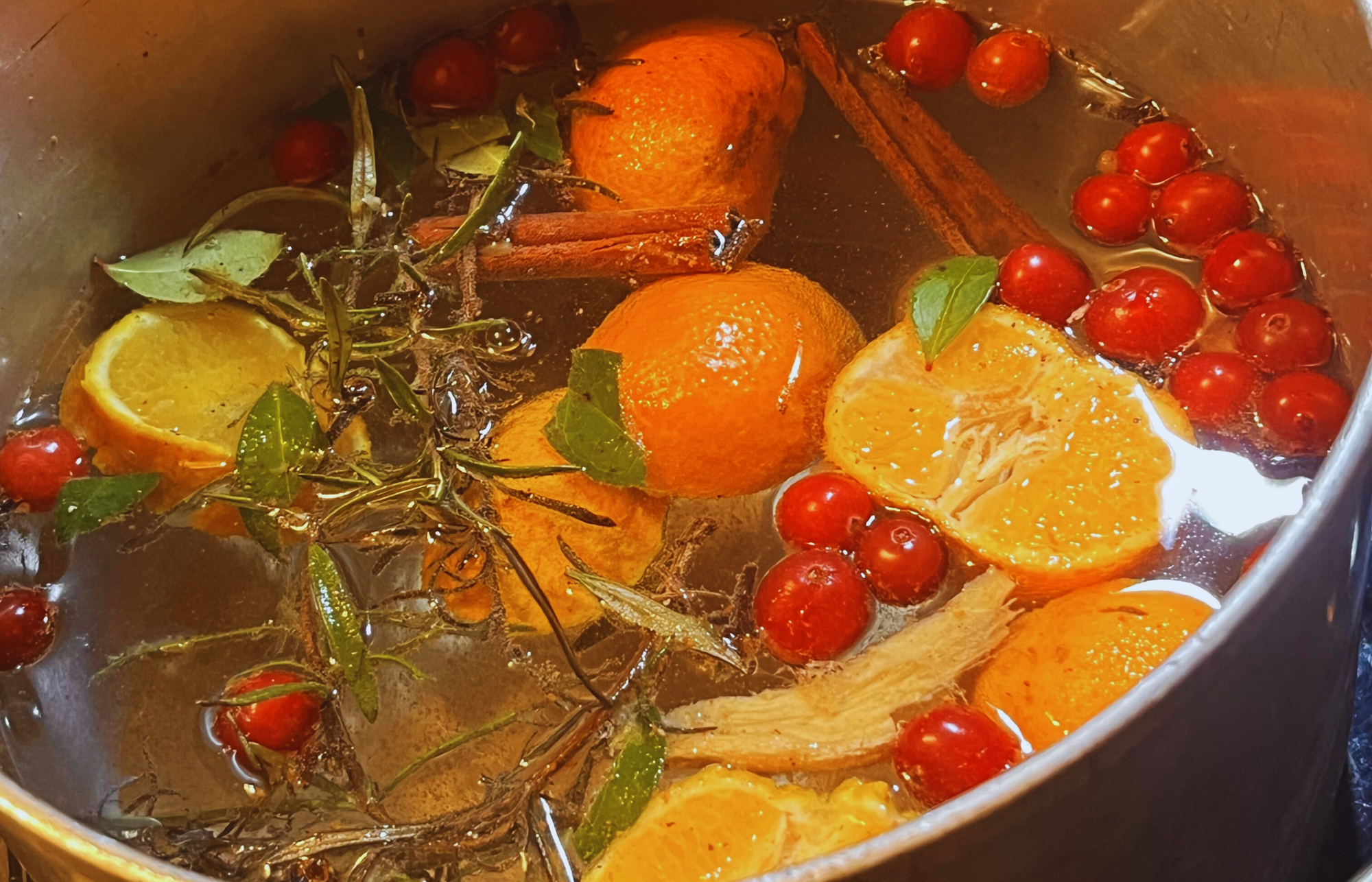
A Simmer Pot for Health and Good Spirits
Fill a pot with water and add citrus peels, spices, and respectful plant matter. Let it simmer, filling your home with scent and warmth. This is practical, ancestral magic: tending air, mood, and attention.
Sit in the Dark
Turn off lights, screens, and background noise. Let darkness become a space of attention. 99.9% of humanity lived this way. Firelight, moonlight, starlight — darkness isn't empty; it carries texture, sound, and presence. Black isn't evil, it's alive, it's a twist in the spiral. Stay long enough to feel yourself dissolving into It All. Let the mask slip. You are not required to perform.
Candle and Witness
Light one candle. Watch how light behaves in the dark. Notice the interplay of shadow and illumination. This is not about banishing darkness, but keeping company with it.
Writing and Mark-Making Without Looking
Have a beloved writing or drawing tool and a large sheet of paper at hand. In the dark or with a single candle lit, using your non-dominant hand, trace, write, or draw without aiming for meaning. Words, forms, patterns, impulses may emerge. Set it where you will see it in the morning. Free write about what you see while you imagine and feel the light returning.
Sound as Seasonal Orientation
Sing carols or galdr (chant or yell) into a glass of water. Drum, rattle, or use your breath and hands. Let sound move through the dark without rhythm or structure. Sound has always helped humans find each other in the winter. Say I am here, mark presence.
Walk a Spiral
In your yard or in a park, in snow or sand, make a large spiral path. Walk to the centre slowly. Talk to the centre. Leave whatever you need to behind. Walk the spiral slowly to return.
Witch Crafts and Seasonal Making
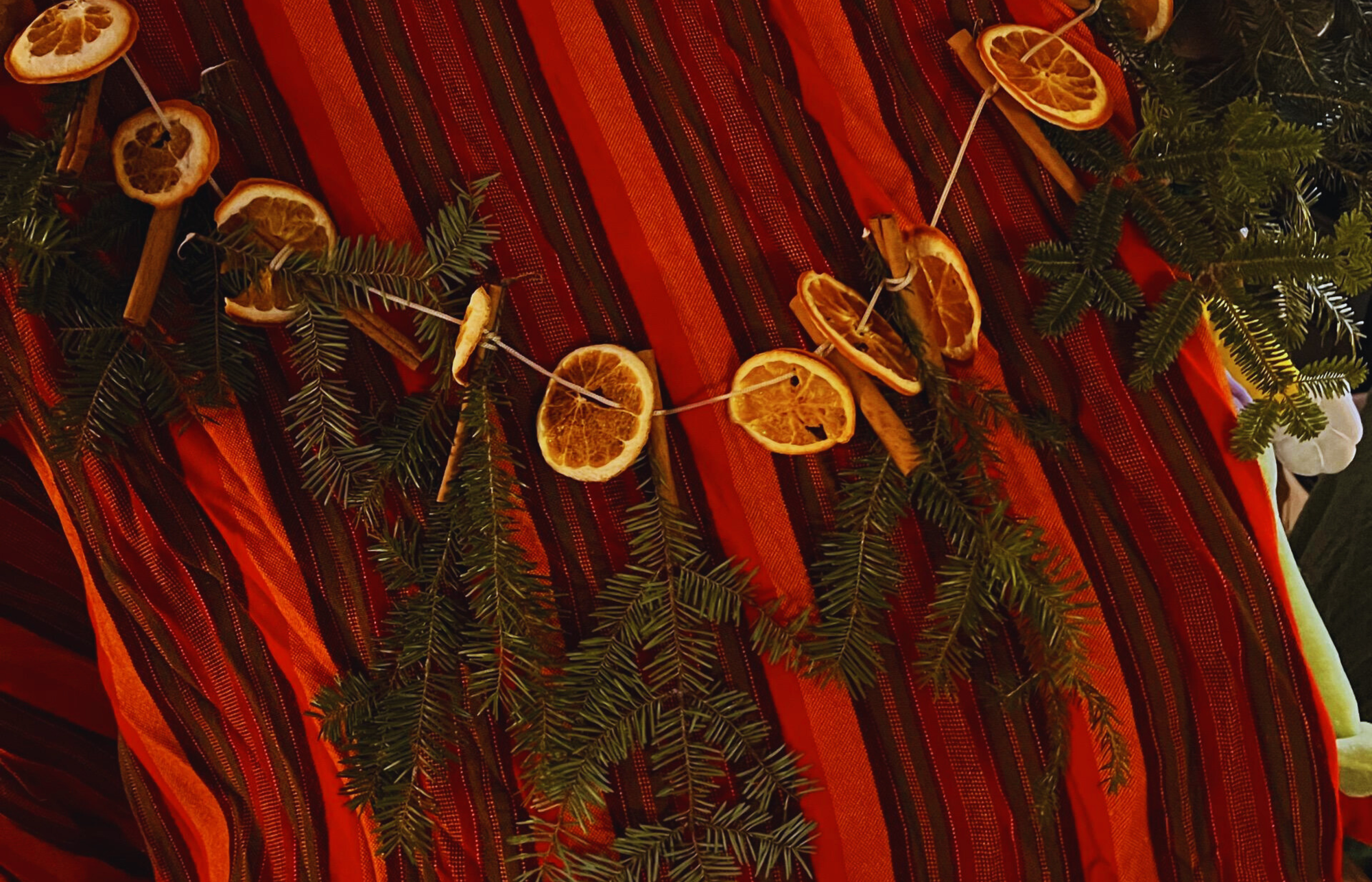
- Evergreen work: Gather and form wreaths, garlands, and bundles from fallen branches. Fill your home with smells and shapes that honour continuity.
- Dry slices of citrus and hang across windows, let the smell and the glow remind you of the returning light.
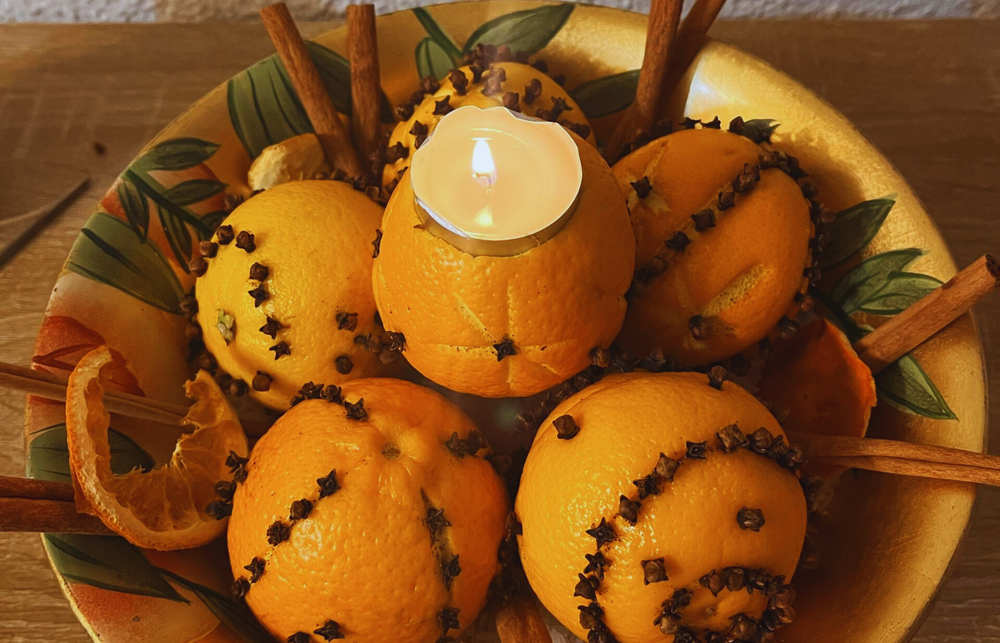
- Make orange pomanders be decorating an orange with cloves. Go further using a small knife or carving tool to add geometric designs, think of snowflakes.
- Create a Yule log or its opposite: Wrap papers or other safely burnable items representing things you want to release around a log, decorate with evergreen, berries, herbs, and in a safe fireplace or firepit let it burn. Or make a log for remembering. What are you not releasing fro this year? Wrap farbics, notes, symbols, stitch and mend with bright embroidery thread and put it on your altar. Add to it yearly. Make it a mutant art project testifying to your own spirals.
- Handmade seasonal gifts: Sachets, written blessings, or food made slowly. Resist extraction; insist on time and care.
Songs and Seasonal Listening
Sing old songs to soothe your ancestors, or to require the power of their faiths to bring hope to the world now. Or invent your own carols! We did!
- Missing Witches Solstice Carols
- Deepest Darkness, Brightest Dawn — Music by Gaelynn Lea
This album by our beloved coven mate holds the solstice in it — moving from deepest darkness toward brightest dawn. An offering of sonic presence, a guide through slipping snow and shifting seasons for tender hearts.
Community Yule & Seasonal Offerings
- A Grounding Meditation for Navigating Holiday Family Dynamics
Lise Lonsemann offers a meditation designed to help people sit with the emotional complexity of family during the holidays. This work meets the long night with compassion and somatic awareness. - Hand-Drawn Lunar Calendar 2026
A hand-drawn lunar calendar for the coming year — a seasonal tool for tracking moon phases, intention cycles, and embodied rhythm. In a time when the Earth’s cycles are under strain, choosing hand-made, thoughtful calendrics is itself an act of resistance.
(Note: You’ll find many more seasonal offerings and coven-only discount codes in the Witch Market inside the Missing Witches coven space.)
Gathering and Community
Solstice reminds us that survival is collective. Community changes how we move through dark and light. Whether in Québec, elsewhere in the north, or across hemispheres online, we reach for each other, trace ourselves toward the spiral, and hold the quiet where we can hear one another. The Missing Witches Coven is open for seasonal practice, shared ritual, and relational care.
Grounding Questions
- Is Yule religious? No — it is a seasonal observance rooted in the turning Earth.
- Do I need joy to celebrate? No — The Solstice makes room for grief, fatigue, anger, darkness and light twisting endlessly.
- Will things get better? The spiral promises movement. Light will grow. Tides will turn. And tonight, in the dark or streaming light, we are allowed to rest.